
|
 |
 | | | | | ||||||||||||||||||||||||||||||||||||||
| | You are in: Entertainment: Film | ||||||||||||||||||||||||||||||||||||||||
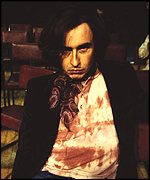
 | | Wednesday, 27 March, 2002, 09:08 GMT Coogan's Manchester party time 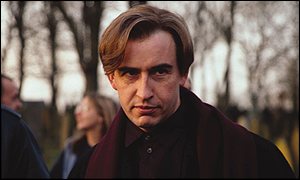 Steve Coogan plays Tony Wilson in the film
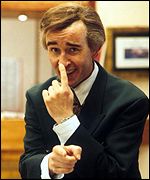
It seems fitting that comedian Steve Coogan should be playing the central role in a film about the golden era of Manchester's music scene. Coogan, better known for his TV comic creation Alan Partridge than his film roles, is a Manchester lad - a "defiant northerner" as he puts it - and a fan of the music that the film, 24 Hour Party People, revolves around.
And he missed the city's next musical high point a decade later, when acid house arrived at the city's Hacienda nightclub and gave birth to club culture and superstar DJs. He had a mortgage by then and, by his own admission, was past that kind of thing. But in the film, Coogan has had the chance to recreate all of the era's tragic and comic highs and lows in the role of the man who was the scene's prime mover, Factory Records boss Tony Wilson. Coogan says that his own days of clubbing and gigging came in the fallow mid-1980s, when The Human League and Spandau Ballet were the height of cool and, with hindsight, "music was a bit rubbish".
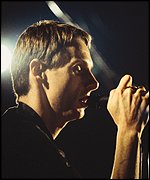
"I used to gel it back one side - I thought I was Phil Oakey." But he was also a fan of bands like Joy Division, who Wilson signed to Factory in 1978 - and who later became New Order and one of the biggest alternative bands of the last 20 years. And he was a regular at the Hacienda, which Wilson opened in 1982 - but before it began to acquire its legendary status when house music and ecstasy arrived in 1988. Covering the period from 1976 to 1992, the story behind 24 Hour Party People is a refreshing antidote to the Pop Idol era, in which fame and fortune have become more important than the music.
It was a moral and artistic triumph, but a commercial disaster, and the principled shambles of Wilson's ventures have made his story the stuff of legend - and now big screen fame. "I've got a kind of respect for Tony Wilson," Coogan says.
"But he's also someone who was a genuine maverick, a genuine pioneer, someone who wanted to do things differently and was a visionary of sorts, and so I want to get that across too. "At the end of the film, I want people to think that his pluses outweigh his minuses and it's a better place for him having been around than had he not." As a young stand-up, Coogan used to do impressions of Wilson - who still works for Granada TV - and his knowledge of the man and his mannerisms have come in handy because his portrayal is spot-on.
"It was weird, it was very odd. I was dressed exactly the same as he was," Coogan says. "We met in the corridor and he just looked at me and screamed and ran away." Coogan says he always wanted to work with director Michael Winterbottom (Wonderland, Welcome to Sarajevo), who gave him free reign to improvise around Frank Cottrell-Boyce's script.
But Wilson did not mind the truth being embellished, and even adopted the film's version of some events when writing the "novelisation" of his story. "He did say at some points he quoted what I say in the film rather than what he said in reality because he said I phrased it better," Coogan says. "I quite liked that." As John Ford said - and as Coogan recites in the film - "When the legend becomes fact, print the legend." | | See also:  Internet links: The BBC is not responsible for the content of external internet sites Top Film stories now:  Links to more Film stories are at the foot of the page. | ||||||||||||||||||||||||||||||||||||||
|
Links to more Film stories |
 | | ^^ Back to top News Front Page | World | UK | UK Politics | Business | Sci/Tech | Health | Education | Entertainment | Talking Point | In Depth | AudioVideo ---------------------------------------------------------------------------------- To BBC Sport>> | To BBC Weather>> ---------------------------------------------------------------------------------- © MMIII|News Sources|Privacy  |


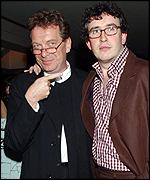


 Tony Wilson
 E-mail this story to a friend