
|
 |
 | | | | | |||||||||||||||||||||||||||||||||||||||||||||||||||||||||||||||||||
| | You are in: Entertainment: TV and Radio | |||||||||||||||||||||||||||||||||||||||||||||||||||||||||||||||||||||
 | | Tuesday, 19 March, 2002, 02:13 GMT Older people 'ignored by TV' 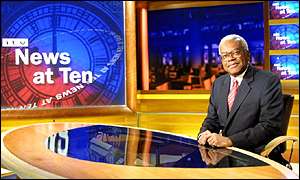 Sir Trevor McDonald: Emerged as viewers' favourite presenter
It is not just policemen who are getting younger. Older people think television presenters are too, according to a survey for Help the Aged and the Independent Television Commission. They also believe that producers of news and factual programmes on television ignore the views of older people and fail to portray them realistically. The two organisations are hosting a conference on Tuesday to see what can be done to improve the representation of older people on screen.
'Cute bottoms' Many older correspondents - men as well as women - are finding it harder to get on the screen. It is widely seen as a symptom of 'dumbing-down'.
The paper reported that she had described herself as an "ageing old trout", and said that television bosses were now more concerned about the "shape of your leg" than professional ability. Ms Adie is one of those speaking at the conference, together with the former editor of ITN Sir David Nicholas and the government minister responsible for equality issues, Barbara Roche. Over-65s 'ignored' But it is not just the professionals who are finding age is a barrier to appearing on television.
Around 70% of those questioned thought that the views of the over-65s were ignored by programme-makers. The figure was even higher for the over-75s, while half of those over 55s thought their age group was not portrayed realistically in news and factual programmes. Yet viewers across all age groups said they would like to see more older people on television, both as presenters and contributors. And the favourite presenters were knowledgeable and professional veterans such as Sir Trevor McDonald, Michael Buerk and Kate Adie, rather than good-looking youngsters. Young viewers Asked for the qualities that made an ideal presenter, almost everyone over the age of 55 plumped for 'knowledgeable', 'believable', 'professional and 'intelligent'. Only 5% thought that 'physically attractive' was very important, while 26% thought it fairly important. Younger respondents, between the ages of 16 and 24, did favour younger presenters - 42% wanted a presenter between the ages of 25 and 34. But most of those asked said they did not mind what age a presenter was. Experience Tuesday's conference is the culmination of a joint initiative between Help the Aged and the ITC. It follows a series of 'media awareness' workshops for older people with ITV companies around the country. The organisers say the focus was to equip older people to make a contribution to factual programmes - and to demonstrate to news editors and producers the rich vein of experience, opinion and authority that is available. But it seems the programme-makers still have a long way to go. | |

See also: Internet links: The BBC is not responsible for the content of external internet sites Top TV and Radio stories now:  Links to more TV and Radio stories are at the foot of the page. | |||||||||||||||||||||||||||||||||||||||||||||||||||||||||||||||||||
|
Links to more TV and Radio stories |
 | | ^^ Back to top News Front Page | World | UK | UK Politics | Business | Sci/Tech | Health | Education | Entertainment | Talking Point | In Depth | AudioVideo ---------------------------------------------------------------------------------- To BBC Sport>> | To BBC Weather>> ---------------------------------------------------------------------------------- © MMIII|News Sources|Privacy  |


 29.03%
  24.84%
 E-mail this story to a friend