
|
 |
 | | | | | ||||||||||||||||||||||||
| | You are in: Entertainment: Arts | ||||||||||||||||||||||||||
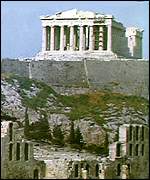
 | | Wednesday, 13 March, 2002, 14:19 GMT Belgians plead for marbles return 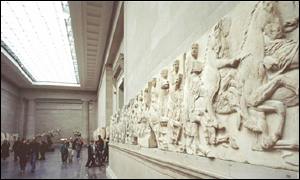 The British Museum says it will not return the sculptures Two Belgian politicians have given international support to a campaign urging the UK to return the Elgin Marbles to Athens in time for the 2004 Olympic Games. The Marbles, which are ancient sculptures from the Parthenon, have been at the centre of a 20-year international row after Greece asked the UK government and the British Museum to give them back.
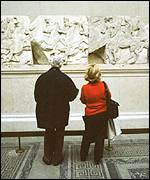
Their campaign backs up a call by UK politicians and actors, including Tony Banks, Michael Foot and Vanessa Redgrave, to hand the sculptures back. The marble friezes are currently in the British Museum in London, which says it is the rightful owner and that Lord Elgin "saved" them from destruction when he removed them in 1799. The Belgian senators said the museum was being "stubborn", and were due to reveal a list of 135 supporters on Wednesday. The public will be invited to add their signatures to a petition via a website, and the names will be handed to the British ambassador in Brussels in June.
'Goodwill' Liberal Democrat MP Richard Allan, who launched the Parthenon 2004 campaign in the UK, said: "The launch of Parthenon 2004 in Belgium shows that return of the Parthenon Marbles to Greece is of global concern. "If we are going to fully embrace being a part of Europe, then we should make this gesture to Greece. "It provides the perfect opportunity for the British government to demonstrate that it is a key player in international co-operation and goodwill." Bill Clinton and Vladimir Putin are among the international politicians who have previously said they support the return, Mr Allan said.
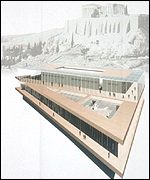
But the British Museum's director, Robert Anderson, has turned down calls for the sculptures to be returned. They "belonged to the British Museum and the international public who come to the British Museum", he said recently. Despite the refusal, Greece is building a new �29m Acropolis museum in which it hopes to house the friezes. Known in Greece as the Parthenon sculptures, they date from between 447 and 432 BC and depict the most formal religious ceremonies of ancient Athens. 'Rescued' They were removed from the Acropolis two centuries ago by the then British ambassador Lord Elgin. Mr Anderson recently wrote in The Times that Elgin had been unjustly "defamed" by the campaign to restore the pieces to Greece. He added that at Elgin's time, the Parthenon was a ruin, having been damaged by an explosion at the end of the 17th Century. "We are indebted to Elgin for having rescued the Parthenon sculptures and others from the Acropolis from the destruction they were suffering," he wrote. | | See also:  Internet links: The BBC is not responsible for the content of external internet sites Top Arts stories now:  Links to more Arts stories are at the foot of the page. | ||||||||||||||||||||||||
|
Links to more Arts stories |
 | | ^^ Back to top News Front Page | World | UK | UK Politics | Business | Sci/Tech | Health | Education | Entertainment | Talking Point | In Depth | AudioVideo ---------------------------------------------------------------------------------- To BBC Sport>> | To BBC Weather>> ---------------------------------------------------------------------------------- © MMIII|News Sources|Privacy  |


 E-mail this story to a friend