
|
 |
 | | | | | |||||||||||||||||||||||
| | You are in: Entertainment: Arts | |||||||||||||||||||||||||
 | | Friday, 8 March, 2002, 13:01 GMT Trial of Kurdish novelist postponed 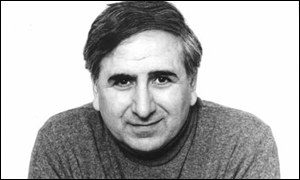 Uzun fled to Sweden in 1978 The trial of a prominent Kurdish novelist in Turkey has been postponed, and a warrant for his arrest lifted. Mehmed Uzun, 47, who lives in Sweden, had been charged with violating Turkey's ban on the Kurdish language. The writer had refused to attend the trial to avoid arrest, after a warrant was issued in an attempt to require him to testify in the hearing.
The decision came after Mr Uzun's lawyers told the court that he wanted freely to attend the trial, his attorney Muharrem Erbey said. Under Turkish law defendants can face charges without first being arrested. Eric Ostberg, formerly a prosecution lawyer for the International War Crimes Tribunal, has supported the novelist's case. "We're very satisfied with the decision - I believe he will be acquitted on 19 April, I don't think the charges are strong enough to convict him," said Mr Ostberg. The case has been criticised internationally and drawn attention to Turkey's laws curbing the use of the Kurdish language in public life. Rebels The use of Kurdish is currently prohibited in schools, official settings and broadcasts other than music. Kurdish rebels, who fought a 15-year war for autonomy in the southeast of the country, have been demanding Kurdish courses in schools. Mr Uzun, who is an outspoken critic of the laws, said: "How can a language be banned? How can a ban be imposed on the identity of a people?" "I am saying this not as a Kurd but as an intellectual," he added. Turkey has also been asked to allow education and broadcasting in Kurdish as a condition for opening talks on European Union membership. Stability But the Turkish military, which has in the past seized power, opposes such rights - along with most of the government. They are concerned it will undermine the country's stability. Mr Uzun, who fled to Sweden in 1978 after serving a brief prison term on charges of Kurdish separatism, could face maximum eight years in prison if convicted. He has written a dozen novels in Kurdish and Turkish, is seen as one of the leading writers trying to create a body of modern Kurdish literature. In January 2000, Mr Uzun was allowed to visit Turkey after 23 years away. Subsequently one of his novels became a Turkish best-seller, although seven of his books were briefly banned again. | | See also:  Internet links: The BBC is not responsible for the content of external internet sites Top Arts stories now:  Links to more Arts stories are at the foot of the page. | |||||||||||||||||||||||
|
Links to more Arts stories |
 | | ^^ Back to top News Front Page | World | UK | UK Politics | Business | Sci/Tech | Health | Education | Entertainment | Talking Point | In Depth | AudioVideo ---------------------------------------------------------------------------------- To BBC Sport>> | To BBC Weather>> ---------------------------------------------------------------------------------- © MMIII|News Sources|Privacy  |


 E-mail this story to a friend