
|
 |
 | | | | | ||||||||||||||||||||||||||||||||||
| | You are in: Entertainment: TV and Radio | ||||||||||||||||||||||||||||||||||||
 | | Saturday, 2 March, 2002, 00:40 GMT BBC Four: Back to the future 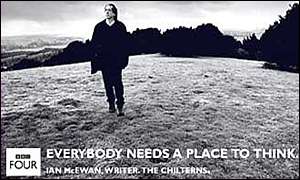 The new station will broadcast for six hours nightly The launch of BBC Four on Saturday inevitably attracts comparison with the launch of BBC Two in April 1964. The digital channel's first evening of programmes - beginning with a portrait of artist Michael Landy - will be simulcast on BBC Two. Both stations promise to broaden the cultural menu of British TV, and BBC Four is taking advantage of new TV technologies in a way that echoes BBC Two's use of 625-line pictures. In 1964 there were only two national TV channels in the UK - the BBC and commercial station ITV. Both used the 405-line system invented in 1934.
The launch day was 21 April 1964, a day later than scheduled thanks to a power cut, and the first programme broadcast on the station was Play School at 1100. The new channel was intended to be a place for more demanding cultural programming, documentaries and other experimental programmes. There was also Newsroom, a half-hour news programme - then a first. 'Think' Advance publicity for BBC Four echoes some of the ideals that went in to the creation of BBC Two. Controller Roly Keating has told viewers to expect "the best in contemporary documentary, music, theatre or international cinema". And the new channel's slogan is "Everybody needs a place to think".
Similarly, when BBC Two launched relatively few households had sets which could receive the 625-line system. And by the end of the 1960s only 2% of households could receive colour pictures - another innovation which BBC Two introduced in 1967. In 1969 all ITV studios switched over to 625-line production, signalling the impending demise of the 405-line system. Analogue But in a precedent which may worry the proponents of digital TV, it was not until 1985 - 21 years after BBC Two's launch - that the 405-line system was finally switched off. The government maintains that it still hopes to switch off analogue TV signals by 2010 at the latest. Already some 40% of UK homes - around eight million in all - are able to access digital TV by cable, satellite or terrestrial means. But the BBC Two experience suggests that eight years to convert the rest of the country may be a rather tight deadline. | |
See also:  Internet links: The BBC is not responsible for the content of external internet sites Top TV and Radio stories now:  Links to more TV and Radio stories are at the foot of the page. | ||||||||||||||||||||||||||||||||||
|
Links to more TV and Radio stories |
 | | ^^ Back to top News Front Page | World | UK | UK Politics | Business | Sci/Tech | Health | Education | Entertainment | Talking Point | In Depth | AudioVideo ---------------------------------------------------------------------------------- To BBC Sport>> | To BBC Weather>> ---------------------------------------------------------------------------------- © MMIII|News Sources|Privacy  |




 E-mail this story to a friend