Analysis
By Zareer Masani
Producer, BBC Radio 4 Analysis |

A guide to the ups and downs of the UK economy 
|
Despite strong growth, there is a growing budget deficit. But does it matter for the economy? Next week's Budget could mark a turning point for the Chancellor of the Exchequer.
Gordon Brown has always made prudence his watchword.
But he'll end up borrowing around �37bn this financial year, and some critics believe he's losing his grip on the government's finances.
Among them is Kenneth Clarke, his Conservative predecessor as Chancellor.
"For his first couple of years, Gordon was the ultimate iron chancellor. Then of course, perversely, as they got more confident and as they won the confidence of the city, from about 2000 onwards they completely changed tack. And I've been very critical of Gordon ever since then for being irresponsible and profligate," he said. Tory choices
When he became Chancellor in 1993, Kenneth Clarke inherited a budget deficit he thought had reached crisis levels.
He decided to increase taxes and limit public spending.
At about the same time, across the Atlantic, Laura Tyson, now Dean of the London Business School, became President Bill Clinton's chief economic adviser. She too had to grapple with a stubbornly large government deficit. "The structural problem, it was thought, endangered economic prosperity in a couple of ways: one, by squeezing out private investment over time through higher interest rates; and by increasing US dependence on foreign lending to the United States.
"So if you believe the numbers that we've had, something like a $10 trillion shift, from $5 trillion of surplus to $5 trillion of deficit, well you can figure out using those numbers what the reduction in investment would be - about half of that - and what the additional foreign lending to the United States required to finance the larger current account deficit would be.
"And then you say alright do we want to set ourselves in a trajectory where we have to depend even more on the rest of the world's savings."
Financing the US deficit
This is in stark contrast to the healthy state in which Laura Tyson and Bill Clinton left the American government's finances, with a very large budget surplus.
Now the rest of us are financing a huge American deficit - and for the privilege we're paying much more for our own mortgages and business loans, because global interest rates are higher than they might otherwise be.
There's a real dilemma here.
Whatever the rules, government borrowing is creeping up in most of the G7 countries.
Does this tell us that fiscal policy should be taken out of the political arena and handed over to independent experts?
After all, this Government's decision to give the Bank of England the power to set interest rates has been judged a huge success.
Ed Balls, Chief Economic Adviser to the Chancellor, doesn't like the idea of delegating fiscal decisions to an outside body.
"We judged that it would not be right for our political and constitutional system to have independent fiscal policy decisions. Those decisions have got to be made by ministers and accountable to Parliament. Now should we have an independent fiscal committee scrutinizing fiscal policy? I don't think so.
"Ken Clarke in 1993 established his panel of wise men to comment on his job on running the economy. What he proved with his wise men was that they could never, ever between themselves agree. It meant that there was less degree of scrutiny and more confusion."
It must be right that in the end the buck stops with the elected politicians when it comes to how much of our money they're going to deduct in tax and how they're going to spend it.
But it's important that we don't fool ourselves that more borrowing won't have to be paid for later by higher taxes.
It's just the same as when we as consumers buy more than we can afford on credit - and end up with an even bigger bill because of the interest.
So let's hope the Chancellor stays just as prudent as he started out.
Independent economist Diane Coyle presented the Radio 4 Analysis programme on the Budget deficit on Thursday 11 March at 2030. It can be heard BBC News Online's budget special site.


 One-Minute World News
  News services
 E-mail this to a friend
  Printable version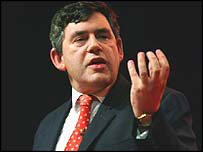
 At-a-glance
 From about 2000 onwards they completely changed tack. And I've been very critical of Gordon ever since then for being irresponsible and profligate


 Tax and credits guide
