
|
 |
 | | | | | | ||||||||||||||||||||||||||||||||||||||||||||||||||||||||||||||||||||||||||||||||||||||||||||||||||||||||||||||||||||||||||||||||||||||||||
| | | You are in: Business | ||||||||||||||||||||||||||||||||||||||||||||||||||||||||||||||||||||||||||||||||||||||||||||||||||||||||||||||||||||||||||||||||||||||||||||
|
| | Wednesday, 5 February, 2003, 10:40 GMT Shock surge in German jobless  The news is another blow to Chancellor Schroeder German unemployment has risen to 11.1%, its highest rate during the government of Chancellor Gerhard Schroeder. The January unadjusted jobless total of 4.62 million represents a jump of almost 400,000 since December. The news is the latest blow to Mr Schroeder, whose popularity has been battered by a string of gloomy economic data since he was re-elected in September. Federal Labour Office president Florian Gerster said the first signs of economic stabilisation had not yet appeared. Last week, Economics Minister Wolfgang Clement warned that he did not expect unemployment to fall below 4 million this year. The latest figures leave Germany second only to Spain in terms of European unemployment. Wrong numbers The unemployment figures are only the latest in an extraordinary avalanche of economic bad news over the past few weeks. 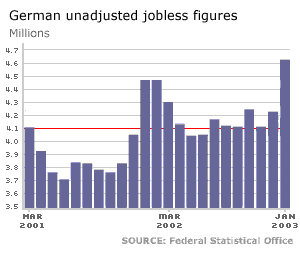 Mr Clement has cut his growth forecast for this year to just 1%, after the 0.2% - Europe's weakest performance - recorded in 2002. And the budget deficit, which has aroused considerable concern among EU policy makers, shows no signs of abating and is certain to demand controversial tax increases. Political problems This prospect, combined with legislative muddle, has cost Mr Schroeder a huge amount of his political popularity. Over the weekend, his Social Democrat party was humiliated in elections in Hesse and Lower Saxony, his home state. Political opposition, and his reliance on support from opposition parliamentarians, has meant that his urgent reform programme has made no progress since September. Before the election, Mr Schroeder promised to reduce unemployment and kickstart growth with a sweeping programme of deregulation. But influential newspaper Die Welt on Wednesday accused Mr Schroeder of being in hock to the trade unions and traditionalists within his own party. Euro woes Trouble in Germany has a knock-on effect on the rest of Europe. Since Germany accounts for at least one-third of eurozone output, a slump there could have a direct effect on the performance of the euro, and the many countries that rely on German trade, aid and investment. | | See also:  03 Feb 03 | Europe 03 Feb 03 | Europe 07 Dec 02 | Europe 04 Dec 02 | Business 07 Nov 02 | Business 16 Nov 02 | Business 23 Sep 02 | Business 05 Sep 02 | Business 06 Aug 02 | Europe 09 Jul 02 | Business 18 Jun 02 | Europe Internet links: The BBC is not responsible for the content of external internet sites Top Business stories now: Links to more Business stories are at the foot of the page. | ||||||||||||||||||||||||||||||||||||||||||||||||||||||||||||||||||||||||||||||||||||||||||||||||||||||||||||||||||||||||||||||||||||||||||
 | |
|  E-mail this story to a friend E-mail this story to a friend |
| |
| Links to more Business stories |
| | | ||
 | ||||
 | | Back to top
| ||
| ---------------------------------------------------------------------------------- To BBC Sport>> | To BBC Weather>> | To BBC World Service>> ---------------------------------------------------------------------------------- © MMIII | News Sources | Privacy |



