|
 |
 | | | | | | ||||||||||||||||||||||||||||||||||||||||||||||||||||||||||||||||||||||||||||||||||||||||||||||||||||||||||||||||||||||||||||||||||||||||||||||||||||||||||||||||||||||||||||||||
| | | You are in: Business | ||||||||||||||||||||||||||||||||||||||||||||||||||||||||||||||||||||||||||||||||||||||||||||||||||||||||||||||||||||||||||||||||||||||||||||||||||||||||||||||||||||||||||||||||||
|
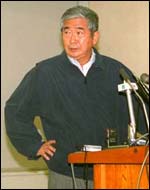
| | Thursday, 30 January, 2003, 07:54 GMT Tokyo loses 160bn yen bank tax case  Bank shares are still on the slide Tokyo's city government has been ordered to pay Japan's near-broke banks 160bn yen ($1.4bn) it took from them in local taxes. Those taxes have now been declared illegal. The decision by the Tokyo High Court means the city's governor, controversial former nationalist author turned politician Shintaro Ishihara, could face financial difficulties.
The city, its revenues decimated by Japan's long downturn and the slump in property prices, was being denied tax by the banks because - he charged - their net profits were being artificially reduced or wiped out by bad debt write-offs. Debt disaster The government has estimated that the hangover from the boom years of the 1980s has left banks with loans worth 50 trillion yen which they will never be able to recoup. Interest rates of near zero percent mean that property, retail and construction companies in particular are barely servicing the massive debts they incurred, secured against assets that are now nearly worthless. Thursday also brought a downgrade by credit rating agency Fitch for most Japanese banks, including its four "megabanks", saying their condition was weakening. The 17 banks - down from 21 after recent mergers - who brought the case argue that the tax not only penalised them unfairly, but also added to the sector's woes, impacting the whole economy. Their tax payments had dropped to 12.2bn yen in 1999-2000 from a peak of 220.8bn yen in 1989-1990, but the new tax ballooned their payments to 102.9bn yen in the year to March 2002. Bigger than before The court has now said it will have to return 162.8bn yen ($1.4bn; �834m) to the banks. The result is particularly bitter for the city, since the High Court was hearing its appeal after a district court decision to award 72.4bn yen in tax rebates and 1.83bn in compensation. A similar case in Osaka, Japan's second city, has been awaiting the court's decision, and the collection of revenues has been stayed in the meantime. But the banks are only escaping the tax temporarily. The government is set to tax the gross profits of all companies bigger than 100bn yen from 2004 on a national level. | |
See also:  21 Jan 03 | Business 20 Jan 03 | Business 27 Dec 02 | Business 31 Oct 02 | Business 23 Oct 02 | Business 22 Oct 02 | Asia-Pacific 02 Oct 02 | Business 03 Oct 02 | Business 26 Nov 01 | Business Internet links: The BBC is not responsible for the content of external internet sites Top Business stories now: Links to more Business stories are at the foot of the page. | ||||||||||||||||||||||||||||||||||||||||||||||||||||||||||||||||||||||||||||||||||||||||||||||||||||||||||||||||||||||||||||||||||||||||||||||||||||||||||||||||||||||||||||||||
 | |
|  E-mail this story to a friend E-mail this story to a friend |
| |
| Links to more Business stories |
| | | ||
 | ||||
 | | Back to top
| ||
| ---------------------------------------------------------------------------------- To BBC Sport>> | To BBC Weather>> | To BBC World Service>> ---------------------------------------------------------------------------------- © MMIII | News Sources | Privacy |