|
 |
 | | | | | | |||||||||||||||||||||||||||||||||||||||||||||||||||||||||||||||||||||||||||||||||||||||||||||||||||||||||||||||||||||||||||||||||||||||||||||||||||||||||||||||||||||||||||||||||||||||||||||
| | | You are in: Business | |||||||||||||||||||||||||||||||||||||||||||||||||||||||||||||||||||||||||||||||||||||||||||||||||||||||||||||||||||||||||||||||||||||||||||||||||||||||||||||||||||||||||||||||||||||||||||||||
|
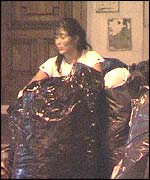
| | Friday, 17 January, 2003, 10:15 GMT Argentina's everyday fight for survival  Silvia collects rubbish so that she can feed her children
 Each evening, thousands of families take to the alleys and boulevards to salvage heaps of cardboard and paper. They're called the "cartoneros" and they make about 4 US cents (2p) on every kilo collected.
A year ago, when Argentina's economy melted and the peso collapsed by 70%, a new industry was born. Waste paper rose in value, and the poor took it upon themselves to gather it. 'Paying the price' Take Silvia, in her mid forties. To feed her 10 children, she rummages through Buenos Aires bins from five until eleven o'clock at night, five nights a week.
Surprisingly, in a country blighted by corruption and mismanagement, poor but proud people like Silvia are still prepared to take some responsibility for their plight. As she sees things: "The governments, the people at the top, we chose the wrong people to direct us. We were mistaken and unfortunately, we're now paying the price." Scavenging has become recognised as a legal activity. Cartoneros can register like any other trade - and the city leaders seem to value what they see as a service to the community. "While the activity of the cartoneros results in getting value out of rubbish, from the point of view of the environment, the cartonero is making a positive action," explains Eduardo Epsteyn, environment secretary, Buenos Aires City. Human resources The same resourcefulness has characterised job-hunting for some Argentines. Last summer, Jose Maria Munoz was an unknown, unemployed 23-year-old struggling to keep his spirits up. His break came when he answered an advert in a paper.
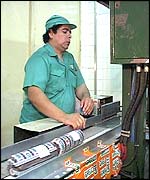
"After trying different ways to try and find a job, it looked to me as a different option," explains Mr Munoz, now a $600 a month retail sales assistant. The show is Recursos Humanos - in English, Human Resources. Contestants are filmed doing a job and tested on how they handle awkward customers. The audience then gets to decide on who should win. In its six-month run in Argentina, Human Resources has helped secure work for 320 people. Revolutionary ideas All over the country, the feeble economy has pushed Argentines into ever more desperate measures. In what seems like a chapter from the Russian Revolution, thousands of Argentines have saved their jobs by seizing control of debt-ridden factories when the bosses fled. The men of the Union and Force Co-operative occupied their metal work plant for six months, defying the bailiffs who wanted to liquidate its stock and assets. Finally the courts granted them the right to continue running the business themselves. With half of the country's 36 million population in poverty, the authorities are reluctant to use muscle to enforce the bankruptcy laws, which should give creditors priority. A new society? The workers now running food factory Ghelco argue that it's better to allow them to keep going rather than make them join the millions of unemployed.
Today, they can take around $55 per week, which is higher than the national average. Their lawyer argues that it's in Argentina's interest to bolster workers' rights when a business is insolvent. "We're asking that insolvent companies are not liquidated," says Luis Caro. "Because if they were, then the whole of Argentina's productive system would be destroyed." Golden grain Argentina's grain farmers, who have an estimated $1.6bn of soya and maize in storage, are also devising new ways to keep business buoyant. They have recognised that grain has become a much safer bet than the bankrupt country's beleaguered peso.
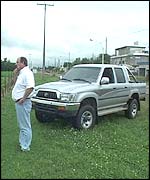
"Rather than put their money with the financial institutions, where you don't know what's going to happen to it, people here keep it as grain in the countryside," says Eduardo Boemo, director of Montes de Oca Cereales. His fields of soya, when harvested, will be priced in US dollars on the global commodity markets. As the peso is worth just a one third of its 2001 value, Mr Boemo now has a lot of buying power in Argentina, where farming accounts for half of the country's $26bn in exports. Back to bartering Mr Boemo also has a valuable commodity for bartering with local suppliers, particularly now that the banking sector has been discredited. The auto industry, reeling from a 54% slump in new car sales since 2001, now accepts grain instead of pesos for the farmers' favourite, the pick-up truck.
Other purchases exchanged for grain include farm equipment, seed and property. It may seem like an archaic system, but this is doing business Argentine-style in the 21st century. | |
See also:  17 Jan 03 | Business 15 Jan 03 | Business 18 Dec 02 | Business 12 Dec 02 | Business 10 Dec 02 | Business 21 Nov 02 | Business Internet links: The BBC is not responsible for the content of external internet sites Top Business stories now: Links to more Business stories are at the foot of the page. | |||||||||||||||||||||||||||||||||||||||||||||||||||||||||||||||||||||||||||||||||||||||||||||||||||||||||||||||||||||||||||||||||||||||||||||||||||||||||||||||||||||||||||||||||||||||||||||
 | |
|  E-mail this story to a friend E-mail this story to a friend |
| |
| Links to more Business stories |
| | | ||
 | ||||
 | | Back to top
| ||
| ---------------------------------------------------------------------------------- To BBC Sport>> | To BBC Weather>> | To BBC World Service>> ---------------------------------------------------------------------------------- © MMIII | News Sources | Privacy |







 All you see around town are people taking out any little bits of paper - they are like ghosts in the night