|
 |
 | | | | | | |||||||||||||||||||||||||||||||||||||||||||||||||||||||||||||||||||||||||||||||||||||||||||||||||||||||||||||||||||||||||||||||||||||||||||||||||||||||||||||||
| | | You are in: Business | |||||||||||||||||||||||||||||||||||||||||||||||||||||||||||||||||||||||||||||||||||||||||||||||||||||||||||||||||||||||||||||||||||||||||||||||||||||||||||||||||
|
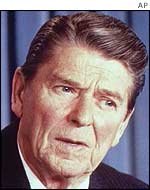
| | Tuesday, 7 January, 2003, 18:33 GMT Is George Bush following the Reagan path?  Former President Reagan cut taxes in a bid to boost the US economy
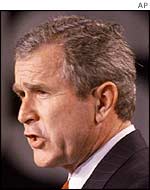
US President George W Bush has unveiled an economic stimulus package incorporating $670bn of tax cuts and increased government spending over the next 10 years. This won't be the first time that a US government looks to cut taxes as a way of boosting the economy. Back in the 1980s there was Reaganomics. President Ronald Reagan's tax cuts were also aimed at boosting growth. In retrospect they were deemed a failure by many economists. So what risk is there that the plan about to be unveiled by fellow Republican George W Bush could end up similarly derided? Decisive action Back in early 1981 when the US had just had a recession and was about to have another, President Reagan told Congress it was time to act.
"Can we who man the ship of State deny it is somewhat out of control?" And the decisive action was to be cuts in taxes and nearly all areas of government spending, with just one exception. "The Department of Defence, it's the only department in our entire program that will actually be increased over the present budgeted figure," President Reagan said. Free lunch? In the event the tax cuts and extra defence spending duly materialised, but the cuts in other budgets did not. The result was a rising deficit in the government's finances. By 1986 David Stockman, President Reagan's former budget chief, was saying changes were needed. "We have conducted the greatest free-lunch fiscal policy of modern times, we may not have intended it, but that is unquestionably the outcome," he said. "We have doubled the national debt in four or five years, and it will keep rising unless this policy is changed." Cutbacks And in the same year, 1986, the President himself was back in Congress negotiating measures to curb the deficit.
"We have agreed to save $43bn over three years from the non-defence portion of the budget," President Reagan said. "Second, we have agreed to close certain tax loopholes to raise revenues by $48bn over three years. There will be no increase in tax rates." "Third, we have agreed to further reductions in defence spending, which will slow our defence build-up somewhat, but will not seriously reduce our national security to a point of unacceptable risk." But it didn't have much impact and it wasn't until the 1990s and President Clinton, that the deficit came down decisively. Legacy Reaganomics is thus widely remembered in terms of increased government borrowing, and the increased interest bill it created for American taxpayers. But William Niskanen, who was an adviser under President Reagan, says that apart from the deficit, the legacy was overwhelmingly positive. "It had very beneficial effects, the rate of economic growth picked up, the rate of inflation came down from over 10% to about 4% and the interest rates came down by a good bit more than that," he said. "So it corrected what was a very serious problem at the end of the Carter administration within about two years, and then over the course of the eight years the total economic growth was at a higher rate than during the prior eight years." Risks And today, President George W Bush wants to cut taxes and spend more on defence. So is this Reaganomics all over again? "It isn't anywhere near as dramatic in either sense," says Mr Niskanen. "It isn't as big a rate cut or it isn't a general tax reform but over time I think economic growth will be higher with the Bush proposal than without it," he said. But there are risks. The government finances have already swung from generous surplus to deficit. The shortfall is likely to get bigger if Congress agrees to what President Bush wants. | |
See also:  07 Jan 03 | Business 07 Jan 03 | Business 07 Jan 03 | Business 02 Jan 03 | Business 15 Oct 02 | Business 06 Jan 03 | Business 20 Nov 02 | Business Internet links: The BBC is not responsible for the content of external internet sites Top Business stories now: Links to more Business stories are at the foot of the page. | |||||||||||||||||||||||||||||||||||||||||||||||||||||||||||||||||||||||||||||||||||||||||||||||||||||||||||||||||||||||||||||||||||||||||||||||||||||||||||||||
 | |
|  E-mail this story to a friend E-mail this story to a friend |
| |
| Links to more Business stories |
| | | ||
 | ||||
 | | Back to top
| ||
| ---------------------------------------------------------------------------------- To BBC Sport>> | To BBC Weather>> | To BBC World Service>> ---------------------------------------------------------------------------------- © MMIII | News Sources | Privacy |