|
 |
 | | | | | | ||||||||||||||||||||||||||||||||||||||||||||||||||||||||||||||||||||||||||||||||||||||||||||||||||||||||||||||||||||||||||||||||||||||||||||||||||||||
| | | You are in: Business | ||||||||||||||||||||||||||||||||||||||||||||||||||||||||||||||||||||||||||||||||||||||||||||||||||||||||||||||||||||||||||||||||||||||||||||||||||||||||
|
| | Wednesday, 18 December, 2002, 12:53 GMT The man who made Vodafone

And a pay packet to match. In 2001, as Vodafone's share price fell to earth, he earned a cool �12.3m (share options included). This year, after a blazing public row over his remuneration, shareholders caved in and approved a basic salary of �1.2m, with a further �3.9m in performance bonus and shares. So did investors get value for money? From peak to trough No doubt, Vodafone has prospered under Sir Christopher, who is a mere 54 years old. Since becoming chief executive at the beginning of 1997, he turned a company with a market value of �7.5bn (and an equivalent share price of just over 49p) into a �77bn mobile phone behemoth. The company now operates in 29 countries, and has a hold on more than 100 million subscribers. What a pity, then, that Vodafone's share price has plummeted from a peak of 399p a share in March 2000 to just 113p now. Settling down? But it was not Sir Christopher's fault that the telecoms bubble burst. And compared with the firm's many rivals, which are choked by debt, Vodafone is standing tall. Despite paying top pound and euro for licences to run third-generation mobile phone services, Vodafone will have a mere �13bn in debt at the end of the year. Compare that with poor France Telecom, struggling under debts of 70bn euros (nearly �45bn), or Deutsche Telekom, burdened with 64bn euros. Unfinished business But not all is settled at Vodafone. Earlier this year, the company shocked the City by delivering a loss of �13.5bn (or �428 a second) for the 12 months to the end of March - a record in UK corporate history. Half a year later, he stunned investors by announcing a �4.25bn profit for the six months to September, well ahead of forecasts. In real life this profit was a �4.3bn loss, once taxes and financial charges were factored in. But even on this measure, Vodafone is doing much better than its rivals. Let them have shares The secret of Sir Christopher's success is simple. During his acquisition spree, snapping up one mobile phone operator after another, he rarely paid cash. Most deals were settled in return for Vodafone's high-flying stock. Yes, this diluted investors' shareholdings, but at least Vodafone is still going strong (unlike, say, Marconi which paid in cash and is now owned by its former bondholders) In the process, Sir Christopher won one of Europe's bloodiest takeover battles, clinching a �101bn deal to buy German mobile phone giant Mannesmann two years ago. One year earlier, in January 1999, he scored another coup, taking over US operator Airtouch. How large are the gaps? But while Vodafone's "global footprint" looks impressive, the company's hold on the market is not that overwhelming. In many of its affiliated phone networks, Vodafone holds only a minority stake. French operator Cegetel is the most prominent example. Vodafone owns 30% of Cegetel, but last month lost the battle for control to its former strategic ally Vivendi. Telecoms analysts worry that Vodafone has no real control over companies that make up about 30% of the UK operator's total market value. But yet again, unlike the foreign ventures of rivals like Japan's NTT Docomo, Vodafone's investments are mostly paying off. The verdict of Vodafone chairman Lord MacLaurin is clear: "I think [Sir Christopher] will go down in history as one of the greatest chief executives this country has ever seen." Leaving on a high note A month ago, Sir Christopher was asked whether he planned to retire soon. "There's plenty of things to do and I'm having a great time," he was quoted as saying. "I don't see myself getting out of the door quite as quickly as you might hope." And there is plenty to do. The era of grand acquisitions is over. Subscriber growth is slow. Vodafone hopes that a new range of mobile services - dubbed Vodafone Live - will increase revenue per customer. It's called organic growth, and would have been new territory for Sir Christopher. Instead, he will step aside, forced by a newspaper leak to confirm his move earlier than planned. Winners and losers The loser is Vodafone's number two, chief operating officer Julian Horn-Smith, who had been tipped by some as likely successor. Investors, though, are not quite sure yet whether they will be on the winning or losing side. Only one thing is certain. Sir Christopher, who was educated at a school next to London's Oval cricket ground, will spend his first day out of work watching his favourite sport. England play South Africa at Lord's, and the ground will be swarming with Vodafone logos. And Sir Christopher will hope that the England team will have as much success as its corporate sponsor. 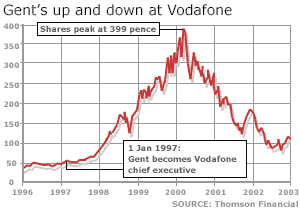 | | See also:  18 Dec 02 | Business 04 Dec 02 | Business 12 Nov 02 | Business 28 May 02 | Business Top Business stories now: Links to more Business stories are at the foot of the page. | ||||||||||||||||||||||||||||||||||||||||||||||||||||||||||||||||||||||||||||||||||||||||||||||||||||||||||||||||||||||||||||||||||||||||||||||||||||||
| |
|  E-mail this story to a friend E-mail this story to a friend |
| |
| Links to more Business stories |
| | | ||
 | ||||
 | | Back to top
| ||
| ---------------------------------------------------------------------------------- To BBC Sport>> | To BBC Weather>> | To BBC World Service>> ---------------------------------------------------------------------------------- © MMIII | News Sources | Privacy |