
|
 |
 | | | | | | ||||||||||||||||||||||||||||||||||||||||||||||||||||||||||||||||||||||||||||||||||||||||||||||||||||||||||||||||||||||||||||||||||||||||||||||||||||||
| | | You are in: Business | ||||||||||||||||||||||||||||||||||||||||||||||||||||||||||||||||||||||||||||||||||||||||||||||||||||||||||||||||||||||||||||||||||||||||||||||||||||||||
|
| | Friday, 13 December, 2002, 15:13 GMT Manufacturers call for pensions reform 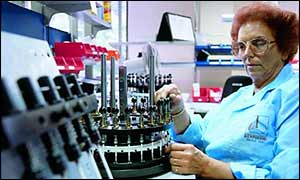 Will workers be forced to make pension contributions? An increasing number of manufacturing firms are closing their final salary pension schemes to both new and existing members, according to survey by the Engineering Employers' Federation (EEF).
It also said half of its members were strongly opposed to union demands for firms to make a minimum contribution to pension schemes of 10% of earnings. The government is due to outline new legislation next week to try to restore confidence in the UK's pensions system.
Under pressure The EEF study is the latest in a number of surveys showing how final salary pension schemes are gradually being phased out. On Wednesday, research from the National Association of Pensions Funds found that the number of British firms to have suspended such schemes had doubled in the past year. Final salary schemes, which guarantee a pension equivalent to a fixed proportion of workers' final wages, provide a more generous retirement income than defined contribution schemes, which are tied to stock market performance. Many companies have found that diminishing returns on stock market investments have made it too expensive to top up their final salary pension funds. "At a time of falling stock market returns and increasing life expectancy, companies are unfortunately facing little choice but to reluctantly close their final salary schemes," said the EEF's deputy director of employment policy David Yeandle. The group said it wanted the government to reform the funding rules and simplify the whole pensions system. Compulsion The crisis facing UK pensions has led some experts to suggest that employees and/or employers should be forced to pay money into pension schemes. The union organisation the TUC has called for employers to make a minimum contribution of 10% of earnings. But the EEF survey of 559 companies found that half were opposed to such a move. Nearly two-thirds of the firms said that a compulsory contribution of between 4% and 6% would be "reasonable", although support was less forthcoming from smaller companies. Three-quarters of companies surveyed also said they thought employees should have to make a compulsory contribution, with between 4% and 6% of earnings being a "reasonable" rate. | |
See also:  11 Dec 02 | Business 17 Sep 02 | Cashing In 13 Aug 02 | Business 07 Jun 02 | Business Top Business stories now: Links to more Business stories are at the foot of the page. | ||||||||||||||||||||||||||||||||||||||||||||||||||||||||||||||||||||||||||||||||||||||||||||||||||||||||||||||||||||||||||||||||||||||||||||||||||||||
| |
|  E-mail this story to a friend E-mail this story to a friend |
| |
| Links to more Business stories |
| | | ||
 | ||||
 | | Back to top
| ||
| ---------------------------------------------------------------------------------- To BBC Sport>> | To BBC Weather>> | To BBC World Service>> ---------------------------------------------------------------------------------- © MMIII | News Sources | Privacy |




 Companies are unfortunately facing little choice but to reluctantly close their final salary schemes

 In pictures


