|
 |
 | | | | | | |||||||||||||||||||||||||||||||||||||||||||||||||||||||||||||||||||||||||||||||||||||||||||||||||||||||||||||||||||||||||||||||||||||||||||
| | | You are in: Business | |||||||||||||||||||||||||||||||||||||||||||||||||||||||||||||||||||||||||||||||||||||||||||||||||||||||||||||||||||||||||||||||||||||||||||||
|
| | Monday, 9 December, 2002, 20:27 GMT EU agrees pollution market 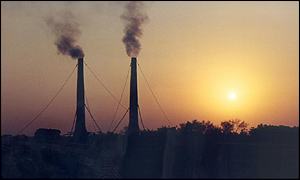 CO2 is emitted from burning fossil fuels European Union environment ministers have unanimously agreed to set up a market to trade pollution permits for carbon dioxide (CO2), the main so-called greenhouse gas of concern. Once approved by the European Parliament, the scheme will cap the amount of CO2 that key industries can produce and will allow companies to buy and sell emission rights within the 15-nation bloc.
"It is good for the environment, it is good for enterprises and it is good for the economy," he added. Polluters in six industries - energy, steel, cement, glass, brick making, paper and cardboard - will be able to buy and sell emission quotas from the start of 2005. Green praise The WWF - formerly the World Wildlife Fund - praised the deal. "WWF is quite pleased that half of the cap and trade directives is behind us. The other half is for the cap (on firms' emissions) to be set at the national level," said WWF climate campaigner Stephan Singer. The pollution market's aim is to cut greenhouse gas levels as agreed last year under the UN's Kyoto Protocol. Under the agreement, the EU must cut emissions of CO2 and five other gases between 2008 and 2012 to 8% below their 1990 levels. The US, which produces a quarter of greenhouse gases, has abandoned the Kyoto Protocol. It questions some of the science that underpins Kyoto and believes the measures called for under the protocol would do immense and unjustified damage to the US economy. Environmental concessions A trial scheme has already been operating since April in London for British companies, but the EU deal is the first inter-country agreement for corporate trading in CO2. Britain succeeded in securing an opt-out allowing industries to be exempt until 2008 if they can show domestic regulation will achieve the same reduction in emissions. To lessen the cost to industry, ministers also agreed a number of other concessions, most significantly lower fines if targets are not met. The penalty in the introductory period, from 2005 to 2007, is 40 euros (�25.60) per tonne of CO2 beyond the allowed limit, rising to 100 euros per tonne from the start of 2008. The European Environment Agency predicted last week that the EU would miss its Kyoto target if emissions trading and other measure were not introduced. | | See also:  09 Dec 02 | Science/Nature 03 Sep 02 | Europe 31 May 02 | Europe 14 Feb 02 | Americas 20 Nov 00 | Business Top Business stories now: Links to more Business stories are at the foot of the page. | |||||||||||||||||||||||||||||||||||||||||||||||||||||||||||||||||||||||||||||||||||||||||||||||||||||||||||||||||||||||||||||||||||||||||||
| |
|  E-mail this story to a friend E-mail this story to a friend |
| |
| Links to more Business stories |
| | | ||
 | ||||
 | | Back to top
| ||
| ---------------------------------------------------------------------------------- To BBC Sport>> | To BBC Weather>> | To BBC World Service>> ---------------------------------------------------------------------------------- © MMIII | News Sources | Privacy |