|
 |
 | | | | | | ||||||||||||||||||||||||||||||||||||||||||||||||||||||||||||||||||||||||||||||||||||||||||||||||||||||||||||||||||||||||||||||||||||||||||||||||||||
| | | You are in: Business | ||||||||||||||||||||||||||||||||||||||||||||||||||||||||||||||||||||||||||||||||||||||||||||||||||||||||||||||||||||||||||||||||||||||||||||||||||||||
|
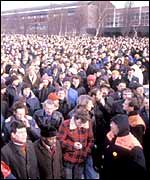
| | Wednesday, 4 December, 2002, 08:33 GMT Industrial peacemaker stages comeback  Strikers in the 1979 winter of discontent kept Acas busy
It was a household name and the key to unlocking long and bitter industrial disputes. Leaders representing miners, steelworkers, firemen, seamen and many others trooped through its doors to try to find a way to end their strikes.
And now it is back. The firefighters have suspended their next planned strike while Acas - the Arbitration Conciliation and Advisory Service - tries to find a way of resolving the dispute. Face to face In the heady days of mass industrial unrest in the 1970s and 1980s, talks took place for days or sometimes weeks behind closed doors at Acas.
Beer and sandwiches were delivered to keep the negotiating teams going while reporters, photographers and TV crews camped outside, waiting for the news that another crippling dispute was over. Inside, Acas negotiators would keep the two sides of any dispute in separate rooms and negotiate with them individually. Only when there was a chance of agreement would they be brought face to face. Working in the shadows Then the world of industrial relations changed. The number of strikes fell sharply and the high-profile disputes, along with Acas, seemed to fade away. Of course the body, funded by taxpayers, was still working to prevent and resolve disagreements between workers and employers.
It was just no longer the stuff of headlines. "They're involved in virtually every strike but I think, more to the point, they're involved in all the strikes that never happen," says William Brown, professor of industrial relations at Cambridge University. "It's a sign of how good Acas is, or how much less disputatious unions have become, that the number that go on to strike is vastly reduced. "People have got better at clearing things up and, in a period of low inflation, there's less pressure from the rank and file." Changing tack John Cridland, deputy director-general of the employers' organisation the CBI, says all that has happened is that Acas' public profile has come back. "There have always been individual highlights and there are a large number of collective arbitrations by Acas in any one year, even though we don't see them on the 9 o'clock or 10 o'clock news as we once did."
But the emphasis of the service has changed. "Now they're more of an advice forum, there's very little arbitration and not a great deal of conciliation," says Sarah Veale, employment rights officer at the union body the TUC. Highly regarded In the past 20 years there has been a big increase in individual employment rights.
So while Acas has spent less time dealing with the big disputes, it has devoted more time to helping solve disagreements between individuals and employers over issues such as sex discrimination. And it is highly regarded both by employers and by unions. The body is paid for by the Department of Trade and Industry and has a council of members drawn from business, unions and the academic world. Mr Cridland, the CBI's representative on the council, says Acas has a big role to play in the private sector by offering seminars, guidelines and training to help avoid disputes. Getting a settlement Now that Acas is back in the thick of things, dealing with the very high-profile firefighters' dispute, how will it cope?
Professor Brown, who is an Acas arbitrator and council member, warns that no-one should expect a quick solution. "Since there are a lot of issues that have been raised, this will take a long time." But, he adds: "These people are professionals, their job is to get settlements." Last minute deals In the past it seemed that the deals would always come during the night after a long and weary session. But that, says Professor Brown, is just part of the process. "If you are a union official trying to show your rank and file that you have really gone as far as possible then, in a sense, you have to negotiate to the last moment and you have to be seen to be suffering a bit. "There's a certain ritual in these things." | |
Internet links:  The BBC is not responsible for the content of external internet sites Top Business stories now: Links to more Business stories are at the foot of the page. | ||||||||||||||||||||||||||||||||||||||||||||||||||||||||||||||||||||||||||||||||||||||||||||||||||||||||||||||||||||||||||||||||||||||||||||||||||||
 | |
|  E-mail this story to a friend E-mail this story to a friend |
| |
| Links to more Business stories |
| | | ||
 | ||||
 | | Back to top
| ||
| ---------------------------------------------------------------------------------- To BBC Sport>> | To BBC Weather>> | To BBC World Service>> ---------------------------------------------------------------------------------- © MMIII | News Sources | Privacy  |






 They're involved in all the strikes that never happen