
|
 |
 | | | | | | |||||||||||||||||||||||||||||||||||||||||||||||||||||||||||||||||||||||||||||||||||||||||||||||||||||||||||||||||||||||||||||||||||||||||||||||
| | | You are in: Business | |||||||||||||||||||||||||||||||||||||||||||||||||||||||||||||||||||||||||||||||||||||||||||||||||||||||||||||||||||||||||||||||||||||||||||||||||
|
| | Sunday, 24 November, 2002, 12:57 GMT Japan's banks brace for results 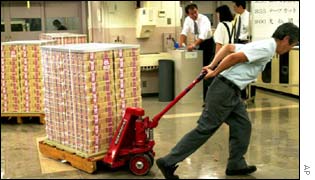 Mizuho's mountainous debts still will take years to clear Japanese megabank Mizuho is preparing a drastic set of reforms to speed up its ability to deal with the bad debts crippling its business, Japan's leading financial newspaper reports. According to the Nihon Keizai Shimbun, the bank is planning to cut 5,000 jobs, one sixth of its total workforce, by March 2004, two years earlier than originally expected. At the same time, it will ask employees to accept a pay cut of between 5% and 20%, said the Yomiuri Shimbun, Japan's biggest-selling daily. The news is expected to be announced on Monday. Burden Mizuho is not only the largest of Japan's Big Four financial institutions. It is also the biggest bank in the world, measured by the size of its assets. That has not stopped it from being almost brought to its knees by its share of the trillions of yen in loans made to closely-allied corporations in the 1980s, which the recipients will never be able to repay. The government estimates the total burden at about 50 trillion yen ($407bn; �258bn). But independent analysts believe the figure could be as much as three or four times as large. Fresh calculations For the moment, Mizuho and its fellow megabanks - Tokyo Mitsubishi, Sumitomo Mitsui, and the smallest and weakest, UFJ - are keeping their heads just above water. They may even produce reasonable first-half performances when they unveil their results this week. But their bad debt portfolios are due for a re-examination by the Financial Services Agency under hard-core reformer Heizo Takenaka, the financial services and economy minister. The probe forms part of Mr Takenaka's plans, with the reluctant blessing of Prime Minister Junichiro Koizumi, to speed up the bad debt cleanup process. Choppy waters ahead That could put a very different slant on things, by demonstrating once more that only interest rates of effectively zero are preventing a number of big-name corporate debtors from going bust in a spectacular fashion, adding to the worst unemployment in half a century. Their debts are secured on property and shares that are now worth a fraction of their original value thanks to Japan's decade-long downturn. The strain of sustaining such huge debts gone bad means banks are refusing to lend to smaller businesses, further crippling chances of economic recovery. Meanwhile, the government is planning a 3 trillion yen supplementary budget. But economist generally feel that even a much larger spending package - impossible, given Japan's immense public debt - would make no difference without root-and-branch reform. | |
See also:  20 Nov 02 | Business 14 Nov 02 | Business 13 Nov 02 | Business 08 Nov 02 | Business 31 Oct 02 | Business Internet links: The BBC is not responsible for the content of external internet sites Top Business stories now: Links to more Business stories are at the foot of the page. | |||||||||||||||||||||||||||||||||||||||||||||||||||||||||||||||||||||||||||||||||||||||||||||||||||||||||||||||||||||||||||||||||||||||||||||||
| |
|  E-mail this story to a friend E-mail this story to a friend |
| |
| Links to more Business stories |
| | | ||
 | ||||
 | | Back to top
| ||
| ---------------------------------------------------------------------------------- To BBC Sport>> | To BBC Weather>> | To BBC World Service>> ---------------------------------------------------------------------------------- © MMIII | News Sources | Privacy |





