|
 |
 | | | | | | |||||||||||||||||||||||||||||||||||||||||||||||||||||||||||||||||||||||||||||||||||||||||||||||||||||||||||||||||||||||||||||||||||||||||||||||||||||
| | | You are in: Business | |||||||||||||||||||||||||||||||||||||||||||||||||||||||||||||||||||||||||||||||||||||||||||||||||||||||||||||||||||||||||||||||||||||||||||||||||||||||
|
| | Friday, 22 November, 2002, 18:38 GMT Gambling on a high-tech recovery 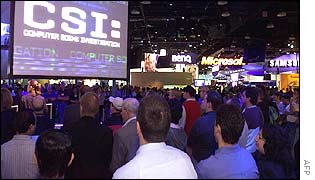 The crowds want to know when the recovery will come
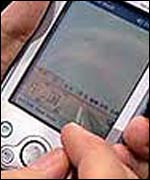
Predicting technology trends is a notoriously risky business. Thomas Watson, CEO of IBM, said in 1943 that the world demand for computers was probably all of five, and Bill Gates said in 1981 that 640K of computer memory should be enough for anyone. However, the Comdex conference provides a pretty good idea of where things are heading in the near term. But, no matter what will be the next killer application or must-have gadget, it is safe to say that those at Comdex want the next big trend to be a recovery in the much battered high-technology industry. Fortunately, companies such as Sweden's Decuma are improving handwriting recognition greatly. They have developed a technology called OnSpot. The software recognises your handwriting, converting it as you write. The converted handwriting appears under the text you entered, making it much easier to write and correct on the fly. The pill cam The line between computers and entertainment is blurring. Game consoles are becoming computers and DVD players, as computers are becoming home entertainment centres. Graphics chip maker nVidia launched its latest processor and proclaimed the beginning of the era of cinematic computing.
And wireless networking is here to stay. Comdex was dotted with so-called Wi-Fi, hotspots, which were always crowded. People would sit congregated around them, happily surfing the internet on wireless enabled laptops. And wireless networking is making its way into all kinds of things and showing up in all kinds of applications. One truly amazing wireless device was the M2A Camera Pill by Given Imaging. A patient swallows the pill, and it takes two pictures per second for six hours. The images are transmitted to a recorder on a belt. The pill is used to examine the inside of the small intestine to diagnose such disorders as irritable bowel syndrome, Crohn's disease and iron-deficiency anaemia. Before the pill camera, exploratory surgery was required. A future without wires But the trend a lot of people at Comdex wanted to know about was when the recovery in the tech industry would begin. National Semiconductor CEO Brian Halla promised to deliver this date in his keynote address.
But he didn't reveal the date until laying out his vision of the future and giving an upbeat assessment of the state of high-technology. This is the industry. This is the place to be," he said. He said that soon the cost of including radios for wireless technologies, from the new short-range standard Bluetooth, will drop to zero. Once features on semiconductors drop to 0.10 microns, the cost of the additional silicon will essentially be nothing. Right now, chips are made with features measuring 0.13 microns. Wireless networking will become pervasive. And the constant march of smaller, faster processors will lead to intelligence being put in more devices. Pervasive networking will link a network of pervasive computers. The million dollar question Another trend that will drive the next boom will be China. As an example, Mr Halla said that China alone accounts for one-fourth of the mobile phone handsets shipped globally and sales are growing by 28% in China per year, he said. The bullish Mr Halla then explained how he had arrived at the date for the next tech boom. He asked Dr Ahmad Bahai to analyse the business cycles of the semi-conductor industry. They used linear and non-linear regression, factored in chaos theory effects and factored in the economic impact of China. The equation roughly tracked the historic business cycles. When will the recovery be in full swing? In true Vegas style, the wheels of a slot machine spun in front of the audience. The date? June 21, 2003. So now you know. | | See also:  22 Nov 02 | Business 21 Nov 02 | Business 19 Nov 02 | Business 18 Nov 02 | Business Internet links: The BBC is not responsible for the content of external internet sites Top Business stories now: Links to more Business stories are at the foot of the page. | |||||||||||||||||||||||||||||||||||||||||||||||||||||||||||||||||||||||||||||||||||||||||||||||||||||||||||||||||||||||||||||||||||||||||||||||||||||
| |
|  E-mail this story to a friend E-mail this story to a friend |
| |
| Links to more Business stories |
| | | ||
 | ||||
 | | Back to top
| ||
| ---------------------------------------------------------------------------------- To BBC Sport>> | To BBC Weather>> | To BBC World Service>> ---------------------------------------------------------------------------------- © MMIII | News Sources | Privacy |