
|
 |
 | | | | | | ||||||||||||||||||||||||||||||||||||||||||||||||||||||||||||||||||||||||||||||||||||||||||||||||||||||||||||||||||||||||||||||||||||||||||
| | | You are in: Business | ||||||||||||||||||||||||||||||||||||||||||||||||||||||||||||||||||||||||||||||||||||||||||||||||||||||||||||||||||||||||||||||||||||||||||||
|
| | Friday, 15 November, 2002, 21:25 GMT IMF chief warns of slow recovery 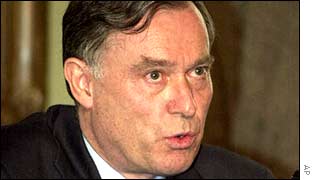 Mr Koehler said there could be setbacks to growth The global economy is in a "difficult situation" and growth over the coming months is set to be slower than expected, the head of the International Monetary Fund (IMF) has warned. Speaking at an economic prize-giving ceremony in Berlin, the IMF managing director Horst Koehler said that the Fund's basic expectation was that there would be a recovery in the coming months. But he said that growth was being hampered by "widespread uncertainty". In September, the IMF said it expected the global economy to grow by 2.8% this year, but lowered its forecast for 2003 from 4% to 3.7%. Uncertain future "The basic view of IMF economists remains that in the coming months we can expect an upwards development, but slower than was hoped some weeks ago, and with the risk there could be further setbacks," said Mr Koehler. The possibility of a war in Iraq has undermined consumer and business confidence in a number of countries, and has also pushed up the price of oil. In addition, the IMF has recently warned of the danger of economic damage being done by further volatility in world stock markets, although the last few weeks have been relatively calm. Mr Koehler said he thought the US economy was strong enough to avoid a second recession, following the downturn it went though last year. But he said more effort needed to be put into preventing the financial market excesses which have come to light since share prices started to fall. "From today's point of view one must see the policy of deregulation of financial markets that came out of the United States in the 1980s as being a bit naive," he said. "We therefore have to work so that in the future the hubris and excesses of capital markets can be better countered." German reform Regarding the European Union, Mr Koehler said while he supported plans to extend the deadline for balancing eurozone countries' budgets to 2006, members should not break the budget deficit limit of 3% of GDP. He also said that Germany urgently needed economic reforms - a reference to reducing the cost to business of hiring workers, among other things. Without such reforms, he said, Germany's sluggish growth rate would not pick up. | | See also:  15 Nov 02 | Business 30 Oct 02 | Business 26 Sep 02 | Business 25 Sep 02 | Business Top Business stories now: Links to more Business stories are at the foot of the page. | ||||||||||||||||||||||||||||||||||||||||||||||||||||||||||||||||||||||||||||||||||||||||||||||||||||||||||||||||||||||||||||||||||||||||||
| |
|  E-mail this story to a friend E-mail this story to a friend |
| |
| Links to more Business stories |
| | | ||
 | ||||
 | | Back to top
| ||
| ---------------------------------------------------------------------------------- To BBC Sport>> | To BBC Weather>> | To BBC World Service>> ---------------------------------------------------------------------------------- © MMIII | News Sources | Privacy |



