|
 |
 | | | | | | ||||||||||||||||||||||||||||||||||||||||||||||||||||||||||||||||||||||||||||||||||||||||||||||||||||||||||||||||||||||||||||||||||||||||||||||||||||||||
| | | You are in: Business | ||||||||||||||||||||||||||||||||||||||||||||||||||||||||||||||||||||||||||||||||||||||||||||||||||||||||||||||||||||||||||||||||||||||||||||||||||||||||||
|
| | Friday, 15 November, 2002, 08:28 GMT Biotech minnow takes on mass killer 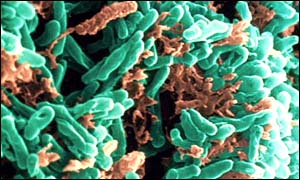 Tuberculosis bacteria: Growing threat
Matthew Durdy has a strange ambition. He wants to win a place in a flow diagram. He has toured South Africa, Kenya and India to persuade health workers that the kits his firm produces deserve a mention in a chart on their clinic walls. The chart, produced by the World Health Organisation (WHO), lays out the medical protocol for detecting and treating tuberculosis (TB). And what Mr Durdy's kit represents, he says, is the means to help that protocol halt the disease's spread. "Tuberculosis is an enormous killer. And my company holds the key, in my view, to moving it from a growth rate of 3% a year into reverse." Bacterium wars Mr Durdy's firm - UK-based Biotec Laboratories - possesses a new means of diagnosing TB. Improved diagnosis, the WHO agrees, is a vital ally in the war against a bacterium which kills 2 million people a year. "It would be a huge leap forward to have a new fast, accurate, cheap diagnostic method," says Dr Chris Dye, WHO co-ordinator of TB monitoring and evaluation. Tried and trusted? The most common technique in current use is is a dye and microscope technique pioneered a century ago.
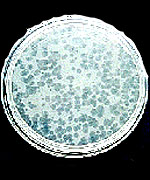
Its advantages are speed and low cost. Its downside is that is only 45-60% accurate, and more reliable diagnostics eat up money or time. "And while a sufferer is waiting for treatment, he can be spreading the disease," Mr Durdy says. New technology Biotec has developed a test which, Mr Durdy says, can take accuracy rates to 90%, and produce results within a day. Technologically, it is based around detecting viruses which attack the TB bacterium, a straightforward process, apparently. "Pathologists love it because they can just hold up a petri dish and say 'look at that'," Mr Durdy says. And Biotec loves it because it represents a means to exploit a vast market. With one person infected with TB every second, about 1 billion extra people will be carriers by 2020, the WHO estimates. Paying the bills Still, there is the matter of paying for Biotec's diagnostic.
TB is know as the "poor man's disease" because of its prevalence in developing countries. And at around $1.50 a shot, plus training fees, Biotec's test may prove dear to poor nations. "Sure. But consider the broader costs of TB," Mr Durdy says. Research due to be published in Kenya shows that the cost to the sufferer of contracting the disease is $60-100, once travel to clinics, lost work days and perhaps the price of tests is accounted for. Mr Durdy is a member of a WHO committee attempting to put its own price on TB. "I would not be surprised if it comes out at $100-200 for each missed case. "You have got transmission, the costs of treating a more developed disease. The economics become quite scary." 'Coca-Cola model' Besides, countries favouring Biotec may one day see their custom rewarded through inward investment. Mr Durdy has plans to expand Biotec's operations from the current headquarters, where it employs 30 people. "It would be exciting to entertain the thought of manufacturing in our major markets. "The advantage we have is that low cost-base environments are also high TB environments." He outlines the "Coca-Cola model", which would see key products made in the UK, with the bulk of reagents manufactured in-country. Grand plans Not that this is the limit of Mr Durdy's ambitions - why stop at diagnostics?
"There is a huge mileage in the TB market. "What we can develop is expertise in distributing TB products as a whole. "We are then in a position to become a channel through which all future TB developments - drugs, vaccines, whatever - reach the marketplace." One day, Biotec may even move into the black, with profitability predicted "by the end of 2003". Hurdles to progress Still, Biotec yet faces considerable challenges before it can claim ownership of the TB niche. Plans for a stock market flotation have stalled amid a collapse in confidence in biotechs. The firm's TB diagnostic has also yet to gain the WHO support which would propel Biotec into the big league. "What we need is a test which is quick, cheap and can be used where laboratory conditions are simple, if they exist at all," the WHO's Chris Dye says. "It may be out there, but we have not found it yet." Meanwhile in India, China, South Africa, even if the diagnostic proves its worth, it represents only part of the solution to tuberculosis. "What we also need are new drugs, training for health workers," Dr Dye says. "A better diagnostic is only one link in the chain." Or, as Mr Durdy might see it, only one box in the flow diagram. | | See also:  10 Sep 02 | Leicester 2002 06 Aug 02 | Health 24 Mar 02 | Health 04 Jan 02 | Business Internet links: The BBC is not responsible for the content of external internet sites Top Business stories now: Links to more Business stories are at the foot of the page. | ||||||||||||||||||||||||||||||||||||||||||||||||||||||||||||||||||||||||||||||||||||||||||||||||||||||||||||||||||||||||||||||||||||||||||||||||||||||||
| |
|  E-mail this story to a friend E-mail this story to a friend |
| |
| Links to more Business stories |
| | | ||
 | ||||
 | | Back to top
| ||
| ---------------------------------------------------------------------------------- To BBC Sport>> | To BBC Weather>> | To BBC World Service>> ---------------------------------------------------------------------------------- © MMIII | News Sources | Privacy |