|
 |
 | | | | | | ||||||||||||||||||||||||||||||||||||||||||||||||||||||||||||||||||||||||||||||||||||||||||||||||||||||||||||||||||||||||||||||||||||||||||||||||||||||||||||
| | | You are in: Business | ||||||||||||||||||||||||||||||||||||||||||||||||||||||||||||||||||||||||||||||||||||||||||||||||||||||||||||||||||||||||||||||||||||||||||||||||||||||||||||||
|
| | Tuesday, 5 November, 2002, 16:18 GMT What now for Marks & Spencer? 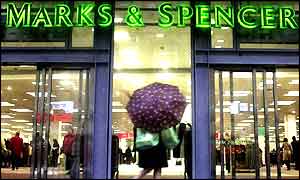 M&S is cheering customers with new ranges
The last two years have seen the UK retailer Marks & Spencer move from its "beleaguered" and "struggling" status, to what market watchers are now calling "rejuvenated" and "on track". This week, the group beat even upgraded analysts' expectations with a leap in profits for the first half of the year thanks to new ranges and a move to different suppliers. But shares fell on the news as cautious words about a "less buoyant" trading environment and "tougher comparatives" from the group's chairman unnerved investors. While the package announced on Tuesday appeared incredibly upbeat, analysts were still cautious. Its UK profits were �20m below some of their original estimates. There are also concerns that the company's profits were inflated by including data from Kings, its US supermarket chain, which should have been sold by now. Analysts had also factored in higher restructuring costs. Has the recovery of this great British institution now peaked, leaving a feeling of disappointment after all the hype? A number of analysts say not, and predict this is just the beginning. Working the magic So how has M&S done it? Three years ago, the group was suffering widespread criticism from analysts and market commentators for having taken its eye off the ball and losing its traditional market. Chairman and chief executive Luc Vandevelde staked his reputation on a turnaround and pledged to restore its former glory, amid much scepticism. New ranges and designers, such as the well-publicised Per Una womenswear range by George Davis, a new management team and a switch to cheaper overseas suppliers, have all played their part.
So too has the decision to sell off overseas operations to concentrate on the core UK business and plans to roll-out more homeware and food-only, or "Simply Food", stores. The results have been profits up 30% for the six months to 28 September, an about-turn in market sentiment, and a doubling of its share price. What now? The danger is that M&S has pulled out all the stops to drag itself back on track, and benefited from flatteringly poor comparisons which make any improvement in performance look considerable. Chief executive Roger Holmes admitted that from now on things could get tougher: "We recognise we are aiming to achieve this (growth) in a market we expect to become less buoyant and at the same time we are coming up against challenging year-ago comparisons." More cautious analysts such as Katharine Wynne at Merrill Lynch also points out that the international contribution, with Kings supermarkets still not sold, has been higher than expected.
'Markdowns', or sale items, have increased in womenswear and these are likely to keep rising in the second half, particularly in childrenswear, to offload excess stock. Then there is the issue of the new credit and loyalty card which M&S has announced, but which will cost an estimated �60m to roll out. Food prices are also coming under pressure, with food deflation continuing across the market. Have faith Despite all of the above, analysts remained upbeat about M&S's chances of continuing its recovery. Simon Procter, retail analyst at Charles Stanley, told BBC News Online that the issues causing pessimism were "not new" and the company will not reach what he called a "recovery plateau" until 2005. "It has about two years of market share and margin gain," predicted Mr Procter. He added that M&S was winning back customers from rivals such as Next who had profited three years ago from the company's demise. Nick Bubb at SG Securities agreed. He told BBC News Online that there was "still lots more to go for" and that the company had already proved its ability to tackle problems. "Given what they can do to get things right, there is still lots of profit potential," said Mr Bubb. Moving up a gear M&S has managed its recovery so far by introducing celebrity-led ranges such as David Beckham childrenswear and returning to what it did best such as classic clothing, hence the new "Perfect" range, and food.
The company is building on this approach with plans for a series of adverts in the run-up to Christmas starring well-known personalities such as Ronnie Barker, Joan Collins and Denise Van Outen. It also plans to up its roll out of the Simply Food chain following the successful trial of a handful of stores so far. Mr Procter said the moves show the retailer's ability to keep pace with the market and sustain its recovery. "Tesco's purchase of T&S stores last week shows that shoppers have a different lifestyle which affects the way they shop." The market for convenience stores is growing," said Mr Procter. And M&S is ideally positioned to cash in on this. | |
See also:  11 Jul 02 | Business 23 Aug 02 | Business 28 Feb 02 | Business 21 Feb 02 | Business 23 Jan 02 | Business 21 Dec 01 | Business 24 May 02 | Business Top Business stories now: Links to more Business stories are at the foot of the page. | ||||||||||||||||||||||||||||||||||||||||||||||||||||||||||||||||||||||||||||||||||||||||||||||||||||||||||||||||||||||||||||||||||||||||||||||||||||||||||||
| |
|  E-mail this story to a friend E-mail this story to a friend |
| |
| Links to more Business stories |
| | | ||
 | ||||
 | | Back to top
| ||
| ---------------------------------------------------------------------------------- To BBC Sport>> | To BBC Weather>> | To BBC World Service>> ---------------------------------------------------------------------------------- © MMIII | News Sources | Privacy |