|
 |
 | | | | | | |||||||||||||||||||||||||||||||||||||||||||||||||||||||||||||||||||||||||||||||||||||||||||||||||||||||||||||||||||||||||||||||||||||||||||
| | | You are in: Business | |||||||||||||||||||||||||||||||||||||||||||||||||||||||||||||||||||||||||||||||||||||||||||||||||||||||||||||||||||||||||||||||||||||||||||||
|
| | Tuesday, 5 November, 2002, 12:39 GMT Disney claims victory in Pooh tussle 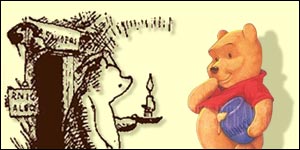 Pooh - in all his forms - is a billion-dollar market maker Entertainment giant Walt Disney claims to have won worldwide rights to Winnie the Pooh and other AA Milne storybook characters, in the latest twist in a decade-long legal wrangle. The corporation, which currently makes at least $1bn a year in revenues from Pooh, its biggest single property, said it had won the support of the heirs of AA Milne and illustrator EH Shepherd. The deal, it said, gave it exclusive worldwide rights, thanks to changes in copyright law that allow heirs to renegotiate intellectual property agreements. But the announcement was rejected out of hand by lawyers for Stephen Slesinger Inc (SSI), which signed an agreement to buy the rights to Pooh in 1929, before licensing them to Disney in 1961. SSI sued Disney in 1991, asking for as much $1bn in royalties and unspecified punitive damages. 'Typical Disney' "I don't know exactly what they are talking about," said Bonnie Eskanazi, a lawyer representing SSI.
Lonnie Soury, a spokesman for SSI, said the move was "typical Disney", and the firm was trying to "go behind the backs of the Schlesinger family". Disney, meanwhile, claims that, under United States law - and the 1998 Copyright Extension Act specifically - a new agreement granting all rights to Disney could be negotiated. The act requires the heirs of the creators of works to give two years' notice to people granted copyright rights, which is why the new agreement begins in 2004. Unexpected success The legal difficulty at the heart of the case lies in the fact that the 1961 licensing agreement did not foresee the boom in entertainment technology. The development of CDs, DVDs and computers has meant that a cartoon character can be exploited in many more different - and lucrative - ways than anyone ever anticipated. Although Disney claims to have revenues of $1bn from the character, SSI's lawyers argue the real figure could be four times as much - if all the merchandising and electronic media activity is taken into account. A judge recently ordered a new audit to determine how much SSI could be owed if royalties were miscalculated. The outcome of this audit would launch another court case on electronic royalties, scheduled to begin next year. | | See also:  16 Aug 01 | Business 14 Aug 98 | Business 21 Jul 99 | Education 05 Feb 98 | UK Internet links: The BBC is not responsible for the content of external internet sites Top Business stories now: Links to more Business stories are at the foot of the page. | |||||||||||||||||||||||||||||||||||||||||||||||||||||||||||||||||||||||||||||||||||||||||||||||||||||||||||||||||||||||||||||||||||||||||||
| |
|  E-mail this story to a friend E-mail this story to a friend |
| |
| Links to more Business stories |
| | | ||
 | ||||
 | | Back to top
| ||
| ---------------------------------------------------------------------------------- To BBC Sport>> | To BBC Weather>> | To BBC World Service>> ---------------------------------------------------------------------------------- © MMIII | News Sources | Privacy |