
|
 |
 | | | | | | |||||||||||||||||||||||||||||||||||||||||||||||||||||||||||||||||||||||||||||||||||||||||||||||||||||||||||||||||||||||||||||||||||||||||||||||||||||||
| | | You are in: Business | |||||||||||||||||||||||||||||||||||||||||||||||||||||||||||||||||||||||||||||||||||||||||||||||||||||||||||||||||||||||||||||||||||||||||||||||||||||||||
|
| | Tuesday, 22 October, 2002, 07:36 GMT 08:36 UK Power firms brave pricing turmoil 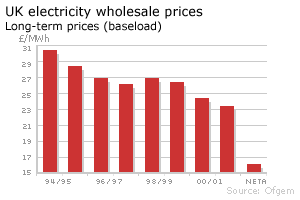
You could be forgiven for thinking that the UK power industry is in the middle of a crisis. Powergen has warned that the market is "bust", US firms are deserting the market in droves, and wholesale electricity prices have fallen through the floor.
And analysts say that the troubles are due to markets behaving as free markets are meant to do. That is because the problem is a simple one - there is just too much electricity for sale. Cash-strapped The National Grid Company has 68 gigawatts of electricity generating capacity available this winter, but peak demand is only expected to reach 55 gigawatts. That significant over-capacity of about 22% has led prices to almost halve from the value of 10 years ago. Many companies have also blamed the structure of the new electricity trading agreement (Neta) for the sharp fall in prices. Either way, the fall in prices has left many of the generation firms in a tight financial squeeze. Selling out TXU Europe, part of an American utility, warned that it was facing bankruptcy before selling its business to Powergen. There are also concerns about the solvency of the US-owned AES Drax plant, the UK's largest coal-fired power station. And British Energy, the nuclear generator, is being propped up by a controversial government loan and is facing an uncertain future. On the supply front, all nine US firms which once owned regional supply businesses have sold out. Survival of the fittest Low gas prices and a market system rigged heavily in favour of the generators enticed a wealth of firms into the marketplace.
A deregulated electricity market appeared to be an attractive new money-maker, and US firms rushed to sign up. But increased competition and adverse market conditions have caused the newcomers - unable to weather the storm - to jump ship. "This is a direct result of a market that for 10 years has been loaded in favour of the generators," said a spokesman from Ofgem, the industry regulator. "If you open the market, you've got to expect that there will be casualties," said Nick Holland, an energy consultant at John Hall Associates. Boom and bust Many experts have also said that the mass exodus is an expected pattern of consolidation after the post-liberalisation boom days. Powergen's chairman Ed Wallis predicted years ago that the industry would consolidate down to four or five key players who both generated electricity and supplied the regional networks. "It's akin to the dot.com scenario when loads of firms rushed to be a part of the latest craze without waiting to work out how they would make money," said Stephen Hall, an industry expert at Energy Argus. And the Enron affair has also played its part. The US utilities - facing weak shareholder confidence on the home front - have been unable to maintain money-draining arms overseas. In search of a martyr While the consolidation is now well underway, the problem of over-capacity still needs to be solved. Someone somewhere is going to have to shut down all or part of its generation business. Many fingers are already pointing at British Energy since the firm is already close to bankruptcy due to expensive commitments to process nuclear waste. But the British government may chose to intervene as nuclear generation helps meet environmental commitments. On the rise Other solutions are also being mooted. Stuart Gray, Wood McKenzie's power expert, suspects that Powergen has bought up TXU's plants in order to remove them from the supply equation and boost prices again. Meanwhile, wholesale electricity prices are already starting to rise on the expectations that a martyr will soon be found. The rebound is yet more proof that this "crisis" is a simple case of the forces of supply and demand at work. And the open market is simply fulfilling its purpose. | | See also:  21 Oct 02 | Business 20 Oct 02 | Business 17 Oct 02 | Business 14 Oct 02 | Business 13 Oct 02 | Business 09 Oct 02 | Business 16 Sep 02 | Business 15 Sep 02 | Business Internet links: The BBC is not responsible for the content of external internet sites Top Business stories now: Links to more Business stories are at the foot of the page. | |||||||||||||||||||||||||||||||||||||||||||||||||||||||||||||||||||||||||||||||||||||||||||||||||||||||||||||||||||||||||||||||||||||||||||||||||||||||
| |
|  E-mail this story to a friend E-mail this story to a friend |
| |
| Links to more Business stories |
| | | ||
 | ||||
 | | Back to top
| ||
| ---------------------------------------------------------------------------------- To BBC Sport>> | To BBC Weather>> | To BBC World Service>> ---------------------------------------------------------------------------------- © MMIII | News Sources | Privacy |






