
|
 |
 | | | | | | ||||||||||||||||||||||||||||||||||||||||||||||||||||||||||||||||||||||||||||||||||||||||||||||||||||||||||||||||||||||||||||||||||||||||||||
| | | You are in: Business | ||||||||||||||||||||||||||||||||||||||||||||||||||||||||||||||||||||||||||||||||||||||||||||||||||||||||||||||||||||||||||||||||||||||||||||||
|
| | Thursday, 10 October, 2002, 07:16 GMT 08:16 UK Japan share slide accelerates 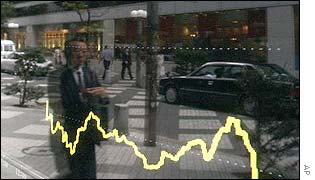 No glint of recovery yet for Japan's markets Shares in Tokyo are plumbing new depths in the wake of renewed concerns about the strength of the US economy and the fate of Japan's beleaguered banks. By the close of business on Thursday at the Tokyo Stock Exchange, the benchmark Nikkei index had fallen 1.2%, although earlier in the day the index had collapsed as much as 4%, marking its worst level since early 1983.
And brokers see little light on the horizon as they struggle with the basic paradox of massive bad debts in the banking sector: that the radical cleanup now envisaged by Prime Minister Junichiro Koizumi's government could now be causing the slump in their share prices. Debts The renewed slide, led by blue-chips such as Toyota Motor Corp, comes as the Bank of Japan begins its monthly two-day meeting on Thursday, ahead of expected anti-deflation measures due soon from the government. The main focus of interest will be the Bank's report on bad bank loans, which are crippling the economy by preventing further loans to hard-pressed companies and thus destroying investment. The Bank is likely to say - albeit in a roundabout way - that there is little it alone can do to help the banks, and that it is well past time for the government to step up and play its part. The first signs that that would happen appeared last week when Mr Koizumi sacked his ultra-conservative Financial Services Minister, Hakuo Yanagisawa, replacing him with economics minister Heizo Takenaka. Mr Takenaka is the most bullish reformer in the Cabinet, and his appointment is seen as a signal that the government might at last get serious about bailing out the banks. Turnaround? It might even, some commentators believe, look at the possibility of allowing some companies, technically bust and currently only staying afloat because interest rates on their immense debts are effectively zero, to go bust, along with the banks carrying their loans. But the prospect is leading to deep unpopularity for most banking shares. Mizuho, the biggest bank in the world by assets, and its smaller rival UFJ have both fallen to all-time lows in recent weeks. "We just can't see the bottom of the market right now," said Koji Muneaki, head of domestic sales trading at HSBC Securities in Tokyo. "The key will be if the government's anti-deflation package will have any meat or not." "We just can't see the bottom of the market right now," said Koji Muneaki, head of domestic sales trading at HSBC Securities in Tokyo. "The key will be if the government's anti-deflation package will have any meat or not." | | See also:  09 Oct 02 | Business 03 Oct 02 | Business 01 Oct 02 | Business 30 Sep 02 | Business 30 Sep 02 | Business 29 Sep 02 | Business 25 Sep 02 | Business Internet links: The BBC is not responsible for the content of external internet sites Top Business stories now: Links to more Business stories are at the foot of the page. | ||||||||||||||||||||||||||||||||||||||||||||||||||||||||||||||||||||||||||||||||||||||||||||||||||||||||||||||||||||||||||||||||||||||||||||
| |
|  E-mail this story to a friend E-mail this story to a friend |
| |
| Links to more Business stories |
| | | ||
 | ||||
 | | Back to top
| ||
| ---------------------------------------------------------------------------------- To BBC Sport>> | To BBC Weather>> | To BBC World Service>> ---------------------------------------------------------------------------------- © MMIII | News Sources | Privacy |





