|
 |
 | | | | | | |||||||||||||||||||||||||||||||||||||||||||||||||||||||||||||||||||||||||||||||||||||||||||||||||||||||||||||||||||||||||||||||||||||||||||||||||||||||||||||||||||||||||||||||||||||||
| | | You are in: Business | |||||||||||||||||||||||||||||||||||||||||||||||||||||||||||||||||||||||||||||||||||||||||||||||||||||||||||||||||||||||||||||||||||||||||||||||||||||||||||||||||||||||||||||||||||||||||
|
| | Monday, 30 September, 2002, 08:25 GMT 09:25 UK Israeli farmers grapple with labour crisis 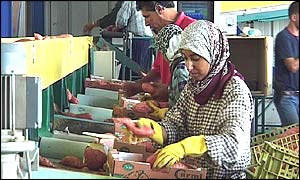 Palestinian workers must run a security gauntlet
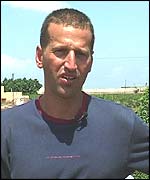
Yitzhak Carmy runs the family farm in central Israel, growing sweet potatoes and strawberries for big-name supermarkets in Europe.
Mr Carmy, a pistol holstered at his side, has much admiration for these women, who set off at 3am, crossing country tracks on foot to avoid military check points. But such hardships have choked off all but a handful of the Palestinian workers necessary to keep much Israeli industry going. Two years ago, 140,000 Palestinians could cross the border daily to earn their living - mainly in construction and farming; now, just 5,000 are allowed in. Pastures new To keep going, producers have gone to the other side of the world to get workers for the jobs Israelis aren't prepared to do.
Yitzhak Carmy complains that managing the business has been an uphill struggle: aside from setting aside 50 days a year for military service, he has to deal with Israel's politically charged bureaucracy. He has been asking for permits for 45 Thai labourers, but so far he's had to make do with just 12. Red tape "Even if they give you the permission to hire foreign workers, I don't have the permit from the government, or the visa," Mr Carmy says.
The farmers and other employers are up against a government that's grasping for ways to shore up the flagging Israeli economy. Unemployment among Israelis now stands at 10%, and the number of foreign workers - mainly from Eastern Europe and Asia - now exceeds the number of Israelis out of a job. The government is pleading with employers to hire more locals. "It's easier to to hire foreigners and it's easier to hire servants because the foreign workers are paid nothing," says Batia Tamir-Kyuris, of the Israeli Employment Service. Generous treatment Back on the farm, Yitzhak Carmy says he pays his Thai labourers more than the Israeli minimum wage of $600 per month. In addition, he also provides accomodation and food. The problem, he says, is that Israelis won't exchange their generous unemployment benefits for this tough type of work. | |
See also:  22 Sep 02 | Middle East 17 Sep 02 | Business 29 Aug 02 | Business 14 Aug 02 | Business 25 Jul 02 | Business 17 Jul 02 | Business 21 Jun 02 | Business 09 Jun 02 | Business 29 Apr 02 | Business 18 Feb 02 | Business Internet links: The BBC is not responsible for the content of external internet sites Top Business stories now: Links to more Business stories are at the foot of the page. | |||||||||||||||||||||||||||||||||||||||||||||||||||||||||||||||||||||||||||||||||||||||||||||||||||||||||||||||||||||||||||||||||||||||||||||||||||||||||||||||||||||||||||||||||||||||
| |
|  E-mail this story to a friend E-mail this story to a friend |
| |
| Links to more Business stories |
| | | ||
 | ||||
 | | Back to top
| ||
| ---------------------------------------------------------------------------------- To BBC Sport>> | To BBC Weather>> | To BBC World Service>> ---------------------------------------------------------------------------------- © MMIII | News Sources | Privacy |