
|
 |
 | | | | | | ||||||||||||||||||||||||||||||||||||||||||||||||||||||||||||||||||||||||||||||||||||||||||||||||||||||||||||||||||||||||||||||||||||||||||||||||||||||
| | | You are in: Business | ||||||||||||||||||||||||||||||||||||||||||||||||||||||||||||||||||||||||||||||||||||||||||||||||||||||||||||||||||||||||||||||||||||||||||||||||||||||||
|
| | Thursday, 12 September, 2002, 21:00 GMT 22:00 UK Greenspan warns Bush over spending 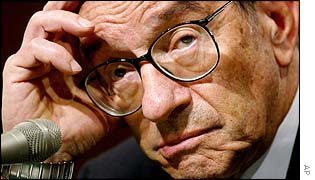 Alan Greenspan: Warning over spending levels US economic guru Alan Greenspan has warned lawmakers that their inability to balance the federal budget threatens the country's economic stability. Mr Greenspan, chairman of the US Federal Reserve, urged Congress and the administration of President George W Bush to restrain the desire to cut taxes while raising levels of public spending.
"Returning to a fiscal climate of continuous large deficits would risk returning to an era of high interest rates, low levels of investment and slower growth of productivity," he told the House of Representatives Budget Committee. Current spending patterns were taking too little note of the decline in tax revenues prompted by the US economic downturn. "The recent surge in discretionary spending, necessitated only in part by the war on terrorism and the need for enhanced homeland security, has... made the budget picture less sanguine," he said. He said that the US economy was still suffering some effect from last year's 11 September attacks, and more recent falls in share prices and investment levels. But he added: "To date the economy appears to have withstood this set of blows well." Challenge ahead The fall in share prices posed a particular threat to tax receipts, hitting not just capital gains tax payments but, indirectly, levies on bonuses paid in relation to share prices. "The sharp drop in equity markets was not expected and the fallout for it will likely damp tax revenues.. for some time," Mr Greenspan said. Yet the ageing of the US population presented the country with "a daunting long-term fiscal challenge". "Indeed, the extent of the challenge is not adequately reflected in conventional measures of the federal budget." The best way to manage the burden was to strengthen the US economy, a process threatened by overspending, Mr Greenspan said. He noted that while the US budget last year had been expected to show a "large and mounting" surplus for at least a decade, deficits were now expected for every year until 2005. Analysts' reaction The speech worsened investor jitters already hit by a surprise rise in US unemployment. "It seems like [Mr Greenspan] is tilting toward a realisation that the economy remains weak," said Tim Ghriskey, senior partner at Ghriskey Capital Partners. Cark Steidtmann, chief economist at Deloitte Research, said: "It's a glum perspective on the economy." The benchmark Dow Jones industrial average closed 201 points lower at 8,379. | |
See also:  11 Sep 02 | Business 04 Sep 02 | Business 02 Sep 02 | Business 30 Aug 02 | Business 07 Aug 02 | Business 16 Jul 02 | Business 03 Jan 01 | Business Internet links: The BBC is not responsible for the content of external internet sites Top Business stories now: Links to more Business stories are at the foot of the page. | ||||||||||||||||||||||||||||||||||||||||||||||||||||||||||||||||||||||||||||||||||||||||||||||||||||||||||||||||||||||||||||||||||||||||||||||||||||||
| |
|  E-mail this story to a friend E-mail this story to a friend |
| |
| Links to more Business stories |
| | | ||
 | ||||
 | | Back to top
| ||
| ---------------------------------------------------------------------------------- To BBC Sport>> | To BBC Weather>> | To BBC World Service>> ---------------------------------------------------------------------------------- © MMIII | News Sources | Privacy |






