|
 |
 | | | | | | |||||||||||||||||||||||||||||||||||||||||||||||||||||||||||||||||||||||||||||||||||||||||||||||||||||||||||||||||||||||||||||||||||||||||||||||||||||||||
| | | You are in: Business | |||||||||||||||||||||||||||||||||||||||||||||||||||||||||||||||||||||||||||||||||||||||||||||||||||||||||||||||||||||||||||||||||||||||||||||||||||||||||||
|
| | Thursday, 12 September, 2002, 08:25 GMT 09:25 UK China's industry giants fight for survival 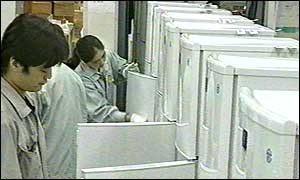 Factories are looking for new ways to survive
But competition is a double-edged sword, and some of China's massive state-run companies face the prospect of lumbering into oblivion. As WTO negotiations rolled on, businesses were already restructuring to help them cope with the inevitable changes ahead.
Dozens of executives were sacked for either embezzling the new cash injections or handling them incompetently. Companies have also tried to diversify, again with varying degrees of success. Lance Browne, an adviser to the China Britain Business Council in Shanghai, sees problems ahead for many state-run operations. Unprofitable "A lot of factories have closed in Shanghai. Textile factories were unprofitable, they were using very old equipment. They were really state subsidised," he says. "Now we're moving to a more market-driven economy a lot of those factories have fallen by the wayside and a lot of people are unemployed, though it's less of a problem in Shanghai than in the rustbelt of north-east China."
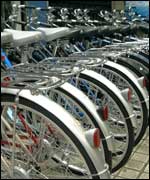
A traditional bicycle can be bought for as little as �20 and prices have not changed much in recent years. But the domestic market is becoming saturated, especially as cars come within the financial reach of more people. Exports go to developing countries but anti-dumping legislation has hindered trade in Europe. Workforce halved And now the Chinese manufacturers are losing market share to firms from Japan and to the Taiwanese cycle maker Giant. The Forever Bicycle Company employed 6,000 people making three million cycles a year during its heyday in the 1960s. Now the workforce has halved and so has the output.
It has not only widened its range of bicycles, but has also moved into electric and LPG powered bikes in an attempt to capitalise on a government drive to cut pollution from cars and motorbikes. "Yes, it's very challenging and we have to think of ways to cope with the challenge," says Forever's general manager, Gu Jue Xin. "We have some new products like the electric and LPG bicycles and we are also co-operating with other companies to produce health sports equipment. Precarious "I think in the next five years we'll build ourselves into the number one health equipment factory." Forever are not alone in their move into areas such as 10 pin bowling equipment - rivals have diversified into high-tech and even tourism. For some companies, especially those with a firm footing in the domestic market, it might be possible to find shelter from the winds of change. Others face a much more precarious future. A study this year by the Cambridge Journal of Economics found that China was already losing out to overseas competitors in heavy industry. Most Chinese airlines prefer Boeing or Airbus to domestic manufacturers and military aircraft are imported from the Soviet Union. The big names in China's power equipment industry are now GEC, Siemens and Alsthom. Joint venture Analysts see privatisation as the natural successor to state-owned companies, but many are uncertain about whether this will make Chinese firms competitive on a global scale. One option is to enter into joint ventures, an increasingly popular way of securing their future. One of the biggest is Volkswagen's partnership with Shanghai Automotive Industry. A factory in Shanghai turns out half of China's cars, including the city's 40,000 taxis. The UK's MG Rover has signed a deal with Chinese auto maker Brilliance to produce medium-sized and small cars.
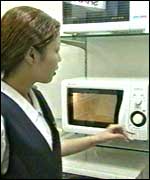
Sharp has teamed up with Mitsubishi and state-run Chinese conglomerate SVA to turn out three million fridges, microwaves and air conditioners at a sprawling complex in Shanghai. It seems a win-win situation - overseas investors get a cheaper workforce and access to domestic markets while Chinese firms get much-needed technology. For many state-owned businesses, it can be the only way to survive. "It's a painful period to transform from a planned to a market economy and from the beginning we have been trying to revolutionise our thinking to raise the quality of our personnel and of the products," says Sharp's Zhu Yong Ming. "We have also streamlined all the administration management, so we have tried very hard to adapt to the conditions." But while joint ventures might help to keep Chinese companies afloat, it also means a share of the profits are leaving the country. Whichever route they choose, most of the former giants of the Chinese economy face some difficult decisions in the new world of global competition. | | See also:  11 Sep 02 | Business 10 Sep 02 | Business 29 Aug 02 | Business 20 Aug 02 | Business Internet links: The BBC is not responsible for the content of external internet sites Top Business stories now: Links to more Business stories are at the foot of the page. | |||||||||||||||||||||||||||||||||||||||||||||||||||||||||||||||||||||||||||||||||||||||||||||||||||||||||||||||||||||||||||||||||||||||||||||||||||||||||
| |
|  E-mail this story to a friend E-mail this story to a friend |
| |
| Links to more Business stories |
| | | ||
 | ||||
 | | Back to top
| ||
| ---------------------------------------------------------------------------------- To BBC Sport>> | To BBC Weather>> | To BBC World Service>> ---------------------------------------------------------------------------------- © MMIII | News Sources | Privacy |