|
 |
 | | | | | | |||||||||||||||||||||||||||||||||||||||||||||||||||||||||||||||||||||||||||||||||||||||||||||||||||||||||||||||||||||||||||||||||||||||||||||||||||||||||||||||
| | | You are in: Business | |||||||||||||||||||||||||||||||||||||||||||||||||||||||||||||||||||||||||||||||||||||||||||||||||||||||||||||||||||||||||||||||||||||||||||||||||||||||||||||||||
|
| | Friday, 6 September, 2002, 07:20 GMT 08:20 UK Ad firms beat the dot.com bust  Nicky Iapino: "The margins we make are massive"
When Pets.com looked a better bet than Sears or Sainsbury, and a gaggle of geeks in a garage was deemed a threat to General Electric?
A few besneakered steps from London's Piccadilly, for instance, is the UK office of Commission Junction, which handles some �10m in sales transactions a month, with a dress-down staff of... "... well there's four. And Fiona, five," says Nicky Iapino, general manager, counting the desks around the attic room. The firm in May even held a glitzy 1999-style conference, offering discussions on themes such as "How to triple your traffic", and goodie bags brimming with branded pens and gimmicks. Growing market The reason for such bullishness? Commission Junction is a buoyant firm within a buoyant sector - internet advertising.
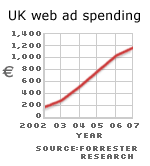
And, despite economic downturn and market meltdown, the sector is poised for further gains, and set to more than double over the next two years, Forrester Research believes. Danny Meadows-Klue at the Interactive Advertising Bureau says: "The internet is still a growing medium, more and more people are logging on every day, and revenues are growing to reflect that." 'Come of age' Yet it is not simply gains in audience figures which are driving the change, but advances in technology too. "In the last two years internet advertising has really come of age," Mr Meadows-Klue said. "What technology means is that you can do things through websites that offline advertisers can only dream of." Stores can, for instance, update prices on their sites every second to promote the latest bargains. "Think of it like a news website updating itself with the latest story." Firms can reach customers quickly and directly through e-mail, or text messages. New capabilities Technology also allows advertisers to ensure they only pay for campaigns which are proving effective in gaining custom. Ever wondered what results advertisers see for the huge sums spent on marketing drives? So did the developers of the so-called "pay for performance" software, which allows advertisers to see how many surfers an internet ad attracted, and how much each respondent spent. Advertisers can discover the sites on which their ads thrived, and which parts of a campaign could have been pulled without hitting revenue. 'High conversion rates' Such software has proved lucrative for firms such as Espotting, and US-based Overture, which saw revenues surge by 179% last year.
"You only pay when we deliver a customer who is actively looking for your service or product," said Jim Bridgend, sales director at the firm's UK office. An "extremely high" proportion of surfers who use the sponsored links subsequently become customers, claims Overture, which has 60,000 clients worldwide, including, in the UK, British Airways, Dixons and Lloyds TSB. Points make prizes The Commission Junction model refines this idea such that it is only when an advert results in a deal, not just a click through, that advertisers pay. "No longer is it about numbers of clicks, but conversion," Ms Iapino says.
Transactions are monitored on a platform which sits between advertisers and web publishers, ensuring correct payments are awarded to sites and indeed to CJ itself, which scoops a 30% commission. The platform also allows publishers to choose which adverts to show, assessing the most lucrative advertisers by an "earnings per click" rating. "Publishers can see which adverts are likely to give the best returns, and judge which ones to take on that basis." Advertisers, meanwhile, can try to maximise their rating by limiting the sites on which they permit their ads to appear. "If you are selling toys or clothes, and your ads are appearing on, say, a fishing site, you are not likely to convert much of any traffic that comes through," Ms Iapino says. "That is only going to damage your [rating]." Lucrative business If that sound complicated, well it is, quite. Ms Iapino likens the CJ programme to a video game. And even Pong, Atari's 1970s tennis computer game, required some practice to perfect. Yet the CJ service has won custom from advertisers such as Marks & Spencer, B&Q and GUS. And CJ saw its business grow by 30% in June. This for an office with five staff, albeit backed by a US parent employing 110. "The margins we make are massive," Ms Iapino says. Opportunity knocks So everybody gains. CJ prospers, advertisers gain by paying only for effective ads and for publishers, opportunities are arising to exploit as yet untapped ad streams. Ms Iapino sees potential in the travel and business-to-business markets in particular. "Office equipment. Stationery. More and more I am looking to buy these online, and I'm sure I'm not the only one." Surfers even benefit through the design subtlety pay-for-performance seems to be encouraging. "Forget banner ads," Ms Iapino says. "The best performing ads are always simple text links." Branding question The weakness of pay-for-performance advertising lies in its inability to promote brand awareness, mass market sites such as AOL claim. Industry bodies such as the IAB and the nascent European Interactive Advertising Association also see pay for performance as a niche player for the future. "There are many facets to internet advertising which advertisers just have not realised the potential, of which this [EPC] model is just one," said Michael Kleindl, EIAA chairman. It is a vision Ms Iapino questions. "Through services like ours, you are putting your ads all over the place. You are getting branding free." Clients are getting two benefits for the price of one, a tempting offer perhaps in hard corporate times, when advertising budgets are under pressure. How refreshing to see an internet firm which has not only survived the dot.com storm, but is placed to thrive in the choppy financial waters which have followed. | |
See also:  24 Jul 02 | Technology 19 Mar 02 | Business 14 Feb 02 | Business 26 Nov 01 | dot life 20 Mar 01 | Business 08 Mar 01 | Business Internet links: The BBC is not responsible for the content of external internet sites Top Business stories now: Links to more Business stories are at the foot of the page. | |||||||||||||||||||||||||||||||||||||||||||||||||||||||||||||||||||||||||||||||||||||||||||||||||||||||||||||||||||||||||||||||||||||||||||||||||||||||||||||||
| |
|  E-mail this story to a friend E-mail this story to a friend |
| |
| Links to more Business stories |
| | | ||
 | ||||
 | | Back to top
| ||
| ---------------------------------------------------------------------------------- To BBC Sport>> | To BBC Weather>> | To BBC World Service>> ---------------------------------------------------------------------------------- © MMIII | News Sources | Privacy |