
|
 |
 | | | | | | ||||||||||||||||||||||||||||||||||||||||||||||||||||||||||||||||||||||||||||||||||||||||||||||||||||||||||||||||||||||||||||||||||||||||||
| | | You are in: Business | ||||||||||||||||||||||||||||||||||||||||||||||||||||||||||||||||||||||||||||||||||||||||||||||||||||||||||||||||||||||||||||||||||||||||||||
|
| | Tuesday, 20 August, 2002, 14:55 GMT 15:55 UK Bangladesh gas exports row hots up 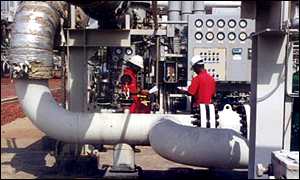 Opposition parties say exporting gas will hamper development The Bangladeshi government's hopes of expanding exports of gas to India have been opposed by a committee set up to report on the controversial plan, press reports said. The ruling coalition's proposal to build a pipeline to India sparked a general strike backed by eight opposition parties last winter. After the High Court ordered a three month ban on gas exports last December, the government set up a National Committee on Gas Resources Utilisation (NCGR) to explore the issue. The committee has now sent its final report to the government, recommending that gas should not exported to India. Nationalist debate The committee reportedly said that foreign energy firms in Bangladesh could be allowed to make limited sales to India, but only if they have first discovered new reserves. The report is a blow to the World Bank, which supports the pipeline proposal, and to foreign oil firms, as well as to the governing Bangladeshi Nationalist Party (BNP). US energy group Unocal has submitted a $1bn plan to build a pipeline. Home grown growth? The issue of exports to India has caused fierce nationalist debate. Left-wing political parties led by the main opposition grouping, the Awami League, have argued that Bangladesh needs its reserves for its own economic development. Exports should only be allowed if Bangladesh has a big enough surplus, they say. The governing Bangladesh Nationalist Party (BNP) has promoted the plan for gas exports since it was elected last year. Supporters of gas exports have argued that the revenues would enable development. Size matters Much of the disagreement focuses on the size of Bangladesh's reserves and how long they are likely to last. The report says the reserves will last until 2015, the Bangladesh Observer newspaper quoted committee member Dr Izaz Hossain as saying. Mr Hossain is one of two members of the nine-member panel who has refused to sign the final report. Both dissenting members are professors at the Bangladesh University of Engineering and Technology (BUET). "Bangladesh needs to export now, not later," Mr Hossain was quoted as saying. "In future our demand will be higher, only today we've got surplus. "If we export from this surplus we can ensure more reserves by further exploration." The government has yet to respond to the report. | | See also:  16 Jul 02 | South Asia 25 Jan 02 | South Asia 06 Dec 01 | South Asia 15 Nov 01 | Business Internet links: The BBC is not responsible for the content of external internet sites Top Business stories now: Links to more Business stories are at the foot of the page. | ||||||||||||||||||||||||||||||||||||||||||||||||||||||||||||||||||||||||||||||||||||||||||||||||||||||||||||||||||||||||||||||||||||||||||
| |
|  E-mail this story to a friend E-mail this story to a friend |
| |
| Links to more Business stories |
| | | ||
 | ||||
 | | Back to top
| ||
| ---------------------------------------------------------------------------------- To BBC Sport>> | To BBC Weather>> | To BBC World Service>> ---------------------------------------------------------------------------------- © MMIII | News Sources | Privacy |



