|
 |
 | | | | | | ||||||||||||||||||||||||||||||||||||||||||||||||||||||||||||||||||||||||||||||||||||||||||||||||||||||||||||||||||||||||||||||||||||||||||||||||||||||||||||||
| | | You are in: Business | ||||||||||||||||||||||||||||||||||||||||||||||||||||||||||||||||||||||||||||||||||||||||||||||||||||||||||||||||||||||||||||||||||||||||||||||||||||||||||||||||
|
| | Monday, 19 August, 2002, 08:55 GMT 09:55 UK US air industry 'must change' 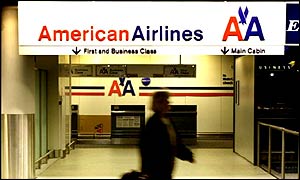
The US airline industry should change an outdated business model it has adopted for the past three decades, according to leading aviation consultant Donald Schenk. The industry is currently facing its most serious financial crisis since manned flight began and the bleak future awaiting many US airlines has become all the more apparent in the past week. The country's sixth largest carrier, US Airways, announced that it was filing for bankruptcy protection. Then American Airlines - the biggest operator - said it was cutting routes and also 7000 jobs. United Airlines followed with a warning that it was also considering filing for bankruptcy protection unless it could cut costs. Changing strategies United Airline's spokesman Jeff Green said it was a tough time for the whole industry. "We are facing a liquidity crunch where we have almost $900m of debt maturity due in the next couple of months," he said.
"Our biggest goal right now is to reduce our costs in an effort to get loans that are backed by the US government and the biggest part of our cost reduction effort is going to be seeking wage concessions from employees." Mr Schenk, president of the New York-based firm Airline Capital Associates, said if the airline business wanted to be profitable again it had to ditch many of the strategies which had brought rich rewards in the past. More to the point he said they could no longer rely on business customers being prepared to pay the full-fare rate for flights. "I believe that business model is dead and it has been discredited," he said. "At least American Airlines has finally announced a couple of days ago that they recognise that they have to change their business model, that they cannot focus on maximising revenues, they must focus on maximising efficiency." "It is less clear to me that the other full-service carriers have really come to that same conclusion." Flexible working Mr Schenk believes this does not necessarily mean cutting back on the expected on-board facilities such as meals, which can cost as little as $2 a person per flight to provide. But he does advocate "using facilities far more aggressively", in other words reducing turnaround times for planes to ensure they don't languish unused at airports for several hours between flights. This, of course, is already the strategy employed by Europe's Ryanair and America's Southwestern Airlines. He also would like to see more flexibility in the way staff, such as cabin crew, work. But the BBC's Ben McMillan, who is an expert on the subject of commercial aviation, said airlines had limited options available. "The problems do go deeper but there's only so much more that they can do," he said. "They've already used the alliance systems to try and reduce costs of maintenance for example by outsourcing maintenance charges." "They've already used 'coach sharing' to try and fill seats on aircraft that would otherwise be empty so there's only so much an airline can do and maintain its function and purpose." Courting smaller entrepreneurs If it is another bail-out from the US government that the airline industry wants, it is unlikely to receive more aid in the current climate.
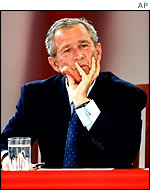
It was given massive financial assistance following the attacks of 11 September but since then the government's relationship with big business has soured following a number of financial scandals involving energy giant Enron, telecoms colossus WorldCom and many others. President Bush now seems to have re-focussed his energies toward courting smaller entrepreneurs. He told a gathering of them in Waco, Texas, last week, that they were the real honest core of hardworking America. "The people here are the people who really make America work - the entrepreneurs, the visionaries, the carpenters, the union heads, the educators, grandmothers - we're here to listen to you, to get a report form what I call the frontlines of the American economy," he said. This, of course, did not go down well in the heartlands of big business. Mr Schenk said he thought the concerns of small businesses - since most of them are private not public - enabled Mr Bush "to sidestep the issues that are clearly confronting the large public corporations" at this time. | |
See also:  14 Aug 02 | Business 13 Aug 02 | Business 12 Aug 02 | Business 13 Aug 02 | September 11 one year on 18 Jul 02 | Business Top Business stories now: Links to more Business stories are at the foot of the page. | ||||||||||||||||||||||||||||||||||||||||||||||||||||||||||||||||||||||||||||||||||||||||||||||||||||||||||||||||||||||||||||||||||||||||||||||||||||||||||||||
| |
|  E-mail this story to a friend E-mail this story to a friend |
| |
| Links to more Business stories |
| | | ||
 | ||||
 | | Back to top
| ||
| ---------------------------------------------------------------------------------- To BBC Sport>> | To BBC Weather>> | To BBC World Service>> ---------------------------------------------------------------------------------- © MMIII | News Sources | Privacy  |