|
 |
 | | | | | | |||||||||||||||||||||||||||||||||||||||||||||||||||||||||||||||||||||||||||||||||||||||||||||||||||||||||||||||||||||||||||||||||||||||||||||||||||||||||
| | | You are in: Business | |||||||||||||||||||||||||||||||||||||||||||||||||||||||||||||||||||||||||||||||||||||||||||||||||||||||||||||||||||||||||||||||||||||||||||||||||||||||||||
|
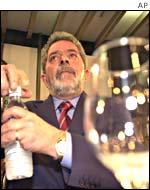
| | Friday, 2 August, 2002, 10:30 GMT 11:30 UK Paul O'Neill pulls foot from mouth 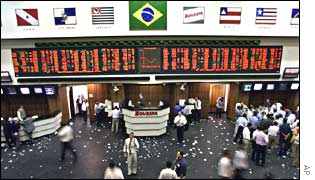 O'Neill's comments triggered a slide on the markets
Brazil's government is building a "strong foundation" for "real economic activity" thanks to its "remarkable job of maintaining sound fiscal and monetary policies".
Confidence like that, expressed by the power which holds the purse strings for future loans from the International Monetary Fund, ought to be reassuring. But taken in the context of earlier statements with a rather different tone, Brazilians might be forgiven for taking them less as solace and more as spin. Upset Brazil, with its neighbours, is suffering from economic turmoil.
There is also the fallout from the meltdown in Argentina, where the peso is in freefall and the government permanently on the verge of collapse. Meanwhile, Uruguay's banks have been closed for almost a week in the hope of avoiding the kind of panic withdrawals that helped deepen Argentina's crisis earlier this year. Money in, money out All in all, not a good time to be insulted by the rich neighbours from North America. Unfortunately, that was precisely what happened.
Mr O'Neill held out little hope, and then chose to explain his reasoning. "Principally they need to put in place policies that will ensure that as specific money come, that it does some good and doesn't just go out of the country to Swiss bank accounts," he said. The result: a run on the Brazilian real, which slid more than 5% the following day. Foot in mouth disease The gaffe is hardly the first time Mr O'Neill has been less than diplomatic.
Part of the reason, perhaps, is his early job performance, when he repeatedly indicated that the value of the dollar was completely up to the markets - when the rest of the administration was sticking to a "strong dollar" line. During his recent tour of Africa the rigidly free-market former head of aluminium giant Alcoa was caught again, opining that aid was no use in alleviating poverty. More immediately, though, his recent forays into the question of corporate accountability have set teeth on edge. The collapse of energy trader Enron, he said, was all part of "the genius of capitalism": proof that markets would do the job of disciplining the wayward, and that governments need have nothing to do with it. | | See also:  02 Aug 02 | Business 31 Jul 02 | Business 30 Jul 02 | Business 29 Jul 02 | Business 29 Jul 02 | Business 28 May 02 | Business 03 Jul 02 | Business 14 Jan 02 | Business Internet links: The BBC is not responsible for the content of external internet sites Top Business stories now: Links to more Business stories are at the foot of the page. | |||||||||||||||||||||||||||||||||||||||||||||||||||||||||||||||||||||||||||||||||||||||||||||||||||||||||||||||||||||||||||||||||||||||||||||||||||||||||
| |
|  E-mail this story to a friend E-mail this story to a friend |
| |
| Links to more Business stories |
| | | ||
 | ||||
 | | Back to top
| ||
| ---------------------------------------------------------------------------------- To BBC Sport>> | To BBC Weather>> | To BBC World Service>> ---------------------------------------------------------------------------------- © MMIII | News Sources | Privacy |