
|
 |
 | | | | | | ||||||||||||||||||||||||||||||||||||||||||||||||||||||||||||||||||||||||||||||||||||||||||||||||||||||||||||||||||||||||||||||||||||||||||||||||||||||||||
| | | You are in: Business | ||||||||||||||||||||||||||||||||||||||||||||||||||||||||||||||||||||||||||||||||||||||||||||||||||||||||||||||||||||||||||||||||||||||||||||||||||||||||||||
|
| | Wednesday, 24 July, 2002, 10:42 GMT 11:42 UK House price growth 'easing' 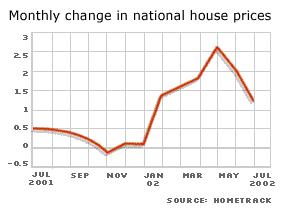 UK house prices continued to move upwards last month, but the rate of growth has fallen over recent months.
According to housing market analyst Hometrack's July survey, house prices rose by 1.2% on average. This follows a 1.8% rise in June and a 2.6% rise in May. Hometrack also reported a slight drop in sale prices for the first time in six months. However, it said that house prices would continue to rise and has not revised its 20% forecast for this year. Sellers' market The gap between the asking price and the price paid for properties increased for the first time in six months. Sellers were achieving on average 97.4% of the advertised asking price, compared to 97.7% in June. Despite this fall, sellers are achieving good prices for their properties compared to last year. In November 2001, for example, only 94.7% of the asking price was achieved by sellers. Other indicators such as property demand is still high, according to the survey. It is taking just three weeks on average to sell a property, compared to five weeks in November 2001, Hometrack said. Regional change All major regions, counties and cities experienced some increase in house prices, but the strongest rises were mainly concentrated in central parts and areas of the south West. Prices rises were greatest in Cornwall, Leicestershire, South Lincolnshire and North Wales. While counties with the lowest price rises were Oxfordshire, Cumbria, Central London and the City, along with South Yorkshire. John Wriglesworth, Hometrack's housing economist, said that despite a slowdown house prices would rise by 20% this year. "The lowest mortgage rates for 50 years, continuing low unemployment, rising incomes, and an acute shortage of supply are ensuring that demand for homes well exceeds the supply, and points to more significant house price rises to come," he said. | |
Top Business stories now:  Links to more Business stories are at the foot of the page. | ||||||||||||||||||||||||||||||||||||||||||||||||||||||||||||||||||||||||||||||||||||||||||||||||||||||||||||||||||||||||||||||||||||||||||||||||||||||||||
| |
|  E-mail this story to a friend E-mail this story to a friend |
| |
| Links to more Business stories |
| | | ||
 | ||||
 | | Back to top
| ||
| ---------------------------------------------------------------------------------- To BBC Sport>> | To BBC Weather>> | To BBC World Service>> ---------------------------------------------------------------------------------- © MMIII | News Sources | Privacy |






