|
 |
 | | | | | | |||||||||||||||||||||||||||||||||||||||||||||||||||||||||||||||||||||||||||||||||||||||||||||||||||||||||||||||||||||||||||||||||||||||||||||||||||||||
| | | You are in: Business | |||||||||||||||||||||||||||||||||||||||||||||||||||||||||||||||||||||||||||||||||||||||||||||||||||||||||||||||||||||||||||||||||||||||||||||||||||||||||
|
| | Tuesday, 2 July, 2002, 17:16 GMT 18:16 UK Hong Kong loses its financial glitter The lights have dimmed for many Hong Kong residents
When the British flag was lowered in 1997 Hong Kong was a glittering and prosperous city and mainland China was very much the poor cousin. Today the tables have turned.
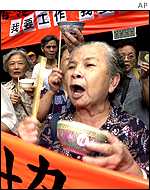
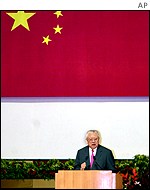
While Hong Kong's chief executive, Tung Chee Hwa, was being sworn in for his second term in office, demonstrators were on the streets, protesting that he was not doing enough to help ordinary people Elizabeth Tang, chief executive of the Confederation of Trade Unions, says Mr Tung must help to alleviate growing poverty in Hong Kong. "We want Mr Tung to help create more jobs," Ms Tang says. "Right now we have over 7% unemployment. "That's 200,000 people without a job and even those with jobs feel very insecure - they are on short-term contracts and are worried about their future." Property prices slump Ada Chan bought her two-bedroom flat just before the handover for 2m Hong Kong dollars (US$250,000).
Since then property prices have plummeted and her flat has halved in value. "Everyone around us thought we had made a very smart decision, paid a very good price," she says. "And then after the financial crisis in 1997, the property market slumped, and now my flat is only worth K$1.2m." Property in the territory used to be a sure bet, an investment guaranteed to give a good return - but no longer. Ada's confidence in Hong Kong's economy has been shattered by her experience of buying her own home. "After this we will never buy in Hong Kong again, we don't trust the property market and don't trust that the economy can recover very soon." Tens of thousands of people agree with her and are angry that their savings have been swallowed by negative equity. Threat to jobs Five years after the handover, Hong Kong is eyeing mainland China's growth with both fear and yearning.
Increasing numbers of jobs are moving over the border, where labour and production costs are cheaper. But Hong Kong business is hoping to attach itself to China's coat tails and reap some of the benefits from the mainland's accession to the WTO and the opening up of huge Chinese markets. Paul Cavey of the Economist Intelligence Unit says mainland China's economic growth is both an opportunity and a threat for Hong Kong. "Hong Kong must maintain its competitive advantage - it needs to maintain the rule of law, it needs to have very good regulation, it needs to make sure the stock market is a very healthy place," he says. "It is not clear that the government is doing enough at the moment, but if it does then Hong Kong will be in a very strong position to benefit from China's growth. "But it does need to do more to make sure it is an opportunity rather than a threat." Future direction uncertain Tsang Lok Sing of the pro-Beijing DAB party has just been appointed to the chief executive's new Cabinet. He admits that the Hong Kong Government has no clear strategy for solving Hong Kong's problems. "When financial turmoil came we realised that our economy was fragile and vulnerable," he says. "We used to rely on the property market and then it collapsed and everyone was broke. "Up until now we still haven't found out what direction we should move in, the new engines of growth are still to be found." Hong Kong is not used to handling economic downturns and a blanket of gloom seems to have settled over the territory. Confidence wanes Ian Perkin, chief economist at the Hong Kong General Chamber of Commerce, says Hong Kong is suffering from a crisis of confidence. "When prices decline and wages decrease, consumers become depressed and don't go out and spend," Mr Perkin says. "When you consider that normal consumption on the street accounts for about 60% of GDP then you can see that it has a significant effect on the economy. "Also it feeds on itself, people become less and less confident the longer it goes on." Tsang Lok Sing says it might be a while before Hong Kong booms once more. "Hong Kong people used to make money so easily and for a long period we took prosperity for granted," he says. "Now we have troubles and we lose hope and confidence. It will take some time before we can get over this." Others fear that Hong Kong has had its heyday. | | See also:  01 Jul 02 | Asia-Pacific 01 Jul 02 | Asia-Pacific 30 Jun 02 | Asia-Pacific 28 Jun 02 | Asia-Pacific 24 Jun 02 | Asia-Pacific Internet links: The BBC is not responsible for the content of external internet sites Top Business stories now: Links to more Business stories are at the foot of the page. | |||||||||||||||||||||||||||||||||||||||||||||||||||||||||||||||||||||||||||||||||||||||||||||||||||||||||||||||||||||||||||||||||||||||||||||||||||||||
| |
|  E-mail this story to a friend E-mail this story to a friend |
| |
| Links to more Business stories |
| | | ||
 | ||||
 | | Back to top
| ||
| ---------------------------------------------------------------------------------- To BBC Sport>> | To BBC Weather>> | To BBC World Service>> ---------------------------------------------------------------------------------- © MMIII | News Sources | Privacy |