|
 |
 | | | | | | |||||||||||||||||||||||||||||||||||||||||||||||||||||||||||||||||||||||||||||||||||||||||||||||||||||||||||||||||||||||||||||||||||||||||||||||||||||||||||||||||||||||||||||||||||||||
| | | You are in: Business | |||||||||||||||||||||||||||||||||||||||||||||||||||||||||||||||||||||||||||||||||||||||||||||||||||||||||||||||||||||||||||||||||||||||||||||||||||||||||||||||||||||||||||||||||||||||||
|
| | Monday, 24 June, 2002, 11:03 GMT 12:03 UK Dollar hits new two-year euro low 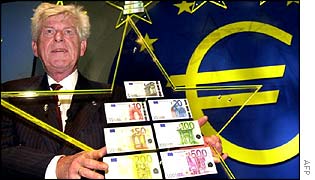 The euro is now approaching parity with the dollar The slide in the value of the dollar has accelerated, with the US currency plumbing new lows despite central bank intervention. The euro has traded at more than $0.98 for the first time since February 2000, extending a rally that has seen it gain almost 9% against the US currency this year.
The dollar blipped higher against the yen in Tokyo trading, but started to fall again after European markets opened. The tumbling dollar has already stirred fears in export-dependent Japan, and is likely to raise the economic stakes ahead of the G8 meeting of rich countries in Canada this week. Calls for action The dollar is reckoned likely to ease further. The US Federal Reserve is set to decide on interest rates on Wednesday, and is expected to leave them unchanged.
"Rising public deficits, a ballooning current account deficit, lagging investment and a consumer sector suddenly looking shaky indicates that foreign accounts might not only be unwilling to allocate additional funds to the US, but might also consider liquidating assets," said Hans Redeker, global head of foreign exchange strategy at BNP Paribas. In the meantime, there is growing pressure on world leaders for concerted efforts to prop up the dollar. The G8 summit could in theory be a venue for such joint intervention, as it has in the past. Weak will But the political will for concerted intervention may not be universal: the US is not absolutely in favour of a strong dollar, and Europe has enjoyed the recent unaccustomed strength of the euro. European Commission economic and monetary affairs spokesman Gerassimos Thomas said the euro's rise had been widely expected. "This year and last year we insisted that the euro was undervalued and that the rate of exchange was not in line with economic developments in the eurozone." Speaking on US television on Sunday, Treasury Secretary Paul O'Neill said he was unconcerned. "The market decides what the right number is... I do have great confidence our economy is going to go forward. "We're going to be fine." | |
See also:  24 Jun 02 | Business 21 Jun 02 | Business 17 Apr 02 | Business 09 May 02 | Business 17 May 02 | Business Internet links: The BBC is not responsible for the content of external internet sites Top Business stories now: Links to more Business stories are at the foot of the page. | |||||||||||||||||||||||||||||||||||||||||||||||||||||||||||||||||||||||||||||||||||||||||||||||||||||||||||||||||||||||||||||||||||||||||||||||||||||||||||||||||||||||||||||||||||||||
| |
|  E-mail this story to a friend E-mail this story to a friend |
| |
| Links to more Business stories |
| | | ||
 | ||||
 | | Back to top
| ||
| ---------------------------------------------------------------------------------- To BBC Sport>> | To BBC Weather>> | To BBC World Service>> ---------------------------------------------------------------------------------- © MMIII | News Sources | Privacy |