|
 |
 | | | | | | |||||||||||||||||||||||||||||||||||||||||||||||||||||||||||||||||||||||||||||||||||||||||||||||||||||||||||||||||||||||||||||||||||||||||||||||||||||||||||||||||||||||||||||||||||||||||||||
| | | You are in: Business | |||||||||||||||||||||||||||||||||||||||||||||||||||||||||||||||||||||||||||||||||||||||||||||||||||||||||||||||||||||||||||||||||||||||||||||||||||||||||||||||||||||||||||||||||||||||||||||||
|
| | Thursday, 13 June, 2002, 07:58 GMT 08:58 UK How Ikea won over the Brits G�ran Nilsson: Carrying quite a load
 There is a mythical feeling. Out there, in the middle of the Baltic Sea." So says the poem pasted on the wall at Ikea's corporate UK headquarters in Brent.
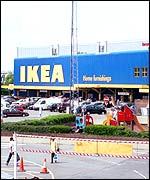
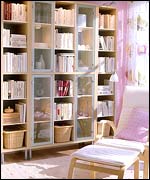
Speed forward more than 10 centuries - and the latest arrival from Sweden has been the retailer of fashionable furnishings. Beech-wood wall systems and glass-door cabinets are no doubt a welcome relief after the rape and pillage of the 10th century. But just as before, the Scandinavians are determined to ring in a few changes. "We are a bank of inspiration on how to make the home in a better, more organised way," says G�ran Nilsson, the UK's managing director. They came and they conquered Since the first British store opened in 1987, shopping at Ikea has become a familiar part of domestic life. "People like the simplicity and versatility of their design, and the sheer cleverness of it," says Gary Davies, professor of corporate reputation at Manchester Business School. Quirky adverts, unbearable traffic jams, flat packs and undecipherable instructions are all part of the experience.
The retailer timed its entry into the UK market perfectly, just as the craze for home furnishings was getting underway. "It was luck and coincidence that we came in then," says Mr Nilsson. During the past few years, the furniture and DIY segment of the market has experienced incredible growth, even for the buoyant retail sector. However, with many predicting the end of the housing boom, Ikea could soon be facing a different climate. A significant proportion of DIY and furniture sales are generated by people moving house and credit-happy consumers. If people rein back on their debts and stop moving house, the sector could be hit by a "double whammy", warns Hugh Phillips, professor of retailing at Bournemouth University. 'Teething problems' Ironically, in early days, Ikea had the opposite problem.
Having introduced the British public to good-value furniture, it then struggled to cope with a tidal wave of demand. The complexities of UK planning law have also thwarted the company's ambitious expansion programme. Since announcing its plans two years ago to open 20 stores in 10 years, Ikea has only managed to launch one in Glasgow. "The market is screaming for us," says Mr Nilsson, who is frustrated by the delay. "Ikea wants to make a tremendous investment in the UK and the money is in the bank. "But if we can't expand here, [the money] will go elsewhere." Time for a re-launch? Ikea is also desperate to take the pressure off existing stores.
"The Brent store is 45% too small compared to its turnover," Mr Nilsson says, explaining that this leads to products being out of stock. But for all its "teething problems", Mr Nilsson maintains that things have improved. Ikea is even planning a re-launch in the UK to draw attention to its investment in new computer systems, different lay-outs and an increasing number of tills. In a year's time, the company will also start selling its goods over the internet and through its call centre. Laid-back Mr Nilsson, who came to run the UK operation in 1998, is not daunted by any dip in consumer confidence. "We always take more market share during a downturn," he says.
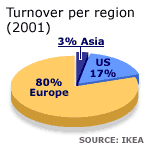
To some extent, Professor Phillips agrees. "Ikea will take a hit, but they are probably more resilient than most because they offer good value for money." This is a point that Mr Nilsson likes to labour, as well as his mission to work in "partnership" with his customers to improve their homes. For a straight-talking Swede, he has certainly bought into Ikea's deliberate socialisation of shopping. Number one? Ikea's winning formula has seen it become the biggest furniture retailer in the UK, in front of MFI and DFS. Mr Nilsson also claims to be unperturbed by Marks & Spencer's return to the home-furnishings business. Ikea, which has dropped its prices by 15% in the last three years, believes it could win a price war with the rejuvenated British brand. But Ikea's biggest challenge could be still to come. Its achievement to date has been to assimilate its Swedish design so ubiquitously into the British household. If spending on the home eventually falls out of favour, the company will have to work harder to keep its customers coming back for more.  The UK is among Ikea's top three markets | |
See also:  21 May 02 | Business 15 Apr 02 | Business 22 Feb 02 | Business 12 Dec 01 | Wales 20 Sep 01 | Scotland 19 Mar 01 | Business Top Business stories now: Links to more Business stories are at the foot of the page. | |||||||||||||||||||||||||||||||||||||||||||||||||||||||||||||||||||||||||||||||||||||||||||||||||||||||||||||||||||||||||||||||||||||||||||||||||||||||||||||||||||||||||||||||||||||||||||||
| |
|  E-mail this story to a friend E-mail this story to a friend |
| |
| Links to more Business stories |
| | | ||
 | ||||
 | | Back to top
| ||
| ---------------------------------------------------------------------------------- To BBC Sport>> | To BBC Weather>> | To BBC World Service>> ---------------------------------------------------------------------------------- © MMIII | News Sources | Privacy |