|
 |
 | | | | | | |||||||||||||||||||||||||||||||||||||||||||||||||||||||||||||||||||||||||||||||||||||||||||||||||||||||||||||||||||||||||||||||||||||||||||||||||||||||||||||||||
| | | You are in: Business | |||||||||||||||||||||||||||||||||||||||||||||||||||||||||||||||||||||||||||||||||||||||||||||||||||||||||||||||||||||||||||||||||||||||||||||||||||||||||||||||||||
|
| | Monday, 15 July, 2002, 11:41 GMT 12:41 UK Dollar stumbles, not tumbles 
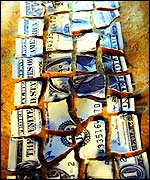
A funny creature, the greenback. Amid the catastrophes of the past couple of years - the bursting of the dot.com bubble, the recession of late last year, the 11 September tragedy - the dollar strode mightily on. Now, with America economically resurgent and politically stable, the dollar decides to take its first serious nosedive in years. Over the past few months, the US currency has staggered lower, especially against the Japanese yen; this week, it fell below parity with the euro and hit a 10-month low against the yen. For years, the strong dollar has been the bedrock of America's prosperity and self-confidence. Is that now about to change? Onwards and upwards Kicking the dollar habit won't be easy. Since 1995, the greenback has headed inexorably upwards, gaining 25% in value against a basket of other rich-world currencies.
In 2000, the US earned $288bn in foreign direct investment (FDI), more than the entire developing world put together. And while America boomed, the rest of the world wilted, particularly recession-mired Japan, and Europe, where sluggish deregulation and awkward politics took a heavy toll on industrial competitiveness. Down and dirty Suddenly, all those certainties seem to have been overturned. Part of the reason for the dollar's recent weakness has been wobbles over renewed terrorist attacks on the US, a recurring nightmare since 11 September. But terror nerves are more of a pretext than a reason; dollar weakness goes much deeper. First, the currency has been overvalued by almost every measure. Calculated by comparing purchasing power, the dollar is 19% overvalued against the yen, and almost 50% against other Asian currencies, according to the Economist magazine's "Big Mac" index. Purchasing-power theory argues that exchange rates will eventually move to correct any major mismatches in spending power from country to country - a uniform product such as a Big Mac should cost more or less the same in dollar terms everywhere, and if it does not, currencies are misaligned. In the long term, currency movements are highly cyclical: recent research from Deutsche Bank found that the dollar was as overvalued in late April as at previous peaks, in 1978-80, 1984-85 and 1995. Fading attraction Second, the US has been a far less attractive place for foreign money of late.
The US stock market, a key attractor of foreign capital, has been distressingly sluggish, despite much excited talk of an economic revival. And that recovery, seemingly a foregone conclusion in the early weeks of this year, is proving rather fuzzier than some had predicted, with the labour market still sluggish and consumers cautious. Last year, foreign direct investment into the US halved to $144bn, and new investment was just $600m in April, down from the recent monthly average of over $11bn. Expensive habit Third, these flows matter so much because the US is in hock to the rest of the world. America's current account - the difference between its income and outgoings - was $417bn in deficit at the end of last, implying that the US needs to attract more than $1bn in fresh foreign money every day just to balance its books. The decade-long economic boom may now be over, but its persistent legacy is an economy greedily dependent on imports of everything from crude oil to computer chips. That's fine when the dollar is strong, but this skin-of-the-teeth economics makes the markets extremely jittery. Bounce Good reasons for the dollar to fall, then - but the chances of its staying down don't look too strong.
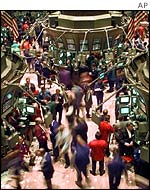
Against the yen and other Asian currencies, the dollar certainly has room to fall, since America's current-account deficit with that region is most acute, and the Japanese stock market has been a surprisingly lively performer this year. "A lot of money managers are scrambling to get back into Japan, in case they miss the boat," says Mr Hayward. America's more balanced trading relationship with Europe, meanwhile, coupled with the region's relatively unexciting economy, argues that the euro has little room to make further gains. The equity effect In any case, a bet on prolonged dollar weakness is effectively a bet against the resurgence of the US stock market - never a safe punt. American shares may be lifeless at present, especially in relation to the sort of returns available in Asia and Eastern Europe, but they cannot stay so for long. Gathering murmurs over a revival of the hi-tech sector and the beneficial effects of prolonged low interest rates - expected to persist until at least August - could well see the US market rebound this year. Helping hand So predictions of the dollar's demise may be premature.
America's insatiable appetite for imported goods, Mr Kantor says, has unwittingly fuelled economies around the world. "A strong dollar effectively exports American growth to the rest of the world," he says. "Without the strong dollar, the growth gap between the US and the rest of the world could have been a lot wider." | |
See also:  15 Jul 02 | Business 22 May 02 | Business 21 May 02 | Business 03 May 02 | Business 02 May 02 | Business 01 May 02 | Business 18 Apr 02 | Business Internet links: The BBC is not responsible for the content of external internet sites Top Business stories now: Links to more Business stories are at the foot of the page. | |||||||||||||||||||||||||||||||||||||||||||||||||||||||||||||||||||||||||||||||||||||||||||||||||||||||||||||||||||||||||||||||||||||||||||||||||||||||||||||||||
| |
|  E-mail this story to a friend E-mail this story to a friend |
| |
| Links to more Business stories |
| | | ||
 | ||||
 | | Back to top
| ||
| ---------------------------------------------------------------------------------- To BBC Sport>> | To BBC Weather>> | To BBC World Service>> ---------------------------------------------------------------------------------- © MMIII | News Sources | Privacy |