
|
 |
 | | | | | |||||||||||||||||||||
| | You are in: Business | |||||||||||||||||||||||
 | | Tuesday, 16 April, 2002, 06:35 GMT 07:35 UK IMF hands over Turkey loan 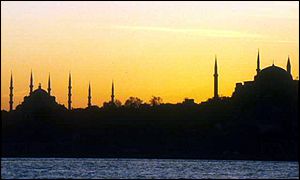 Economic reforms could bring a new dawn for Turkey The International Monetary Fund (IMF) has agreed to release a further $1bn (�700m) to Turkey after a review of the country's economic performance. The cash is part of a $16bn loan agreed in February. "The Turkish authorities have made considerable progress in implementing their ambitious economic reform program," said the Fund's first deputy managing director Anne Krueger. The IMF has repeatedly criticised Turkey's lack of financial discipline and called for both structural and financial reforms to beat back inflation and make its economic growth more stable. "[Turkey's economic] programme addresses these weaknesses and should reduce the vulnerability of the economy to shocks," Ms Krueger said. Return to growth Ms Krueger applauded Turkey's "decisive step away from the interventionist policies of the past" and said the country was laying "the groundwork for a more consistent economic performance in the future".
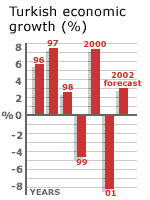
Last week, the IMF's local representative Odd Per Brekk said he was "hopeful that the three percent target for gross national product growth in 2002 is reachable", even though there have been few signs of economic growth in Turkey so far this year. Bailout The road to Turkey's latest IMF programme began in February 2001 when a devastating financial crisis forced it to devalue its currency, the lira. The lira plunged by almost 50%, inflation soared by about 80%, and hundreds of thousands lost their jobs, plunging Turkey into its worst recession in 50 years. The financial crisis lingered for months, bringing the country's gross national product down by 9.4%. In the end, the IMF stepped in with $12bn in fresh, though conditional, loans along with the release of $4bn of frozen loans. | | See also:  Internet links: The BBC is not responsible for the content of external internet sites Top Business stories now:  Links to more Business stories are at the foot of the page. | |||||||||||||||||||||
|
Links to more Business stories |
 | | ^^ Back to top News Front Page | World | UK | UK Politics | Business | Sci/Tech | Health | Education | Entertainment | Talking Point | In Depth | AudioVideo ---------------------------------------------------------------------------------- To BBC Sport>> | To BBC Weather>> ---------------------------------------------------------------------------------- © MMIII|News Sources|Privacy  |


 E-mail this story to a friend