
|
 |
 | | | | | ||||||||||||||||||||||||||||||||
| | You are in: Business | ||||||||||||||||||||||||||||||||||
 | | Monday, 1 April, 2002, 10:56 GMT 11:56 UK Zambia fights to save copper mines 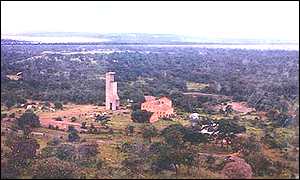 Konkola mines face an uncertain future
Multinational mining giant Anglo American, a veteran of the Copper Belt, is poised to pull out of the new mine, whose operation is crucial to the Zambian economy.
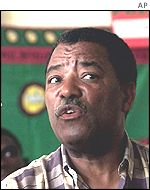
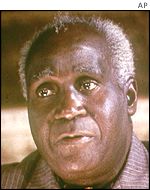
"It would really spell doom for Zambia," Anderson Mazoka, Anglo's former boss in Zambia, told the BBC's World Business Report. "Konkola Deep Mine is the only mining project of substance that will replace the aging mines in the Copper Belt." Copper economy Modern Zambia was built on copper. The mines, previously owned by a company that later became Anglo American, were nationalised at independence by the president, Kenneth Kaunda.
Their profits built Zambia's schools, roads and hospitals and are still the only significant source of foreign exchange. The industry is now back in private hands after the state-run Zambia Consolidated Copper Mines (ZCCM) was split-up and privatised in the mid-1990s. The sell-off was intended to bring a new lease of life to the Copper Belt but Zambia's biggest industry is now in jeopardy. Privatisation justified? "The future of the Copper Belt was in more doubt before privatisation," Andrew Chipwende, acting chief executive of the Zambia privatisation authority told WBR.
"These assets are in much better condition than they were, so the prospect of another private investor coming in and picking up the operations are much brighter than they would have been." Anglo has taken steps to modernise Zambia's ailing mines. It has already invested more than $300m in the deep-level mines at Konkola and blames its decision to pull out on the low copper price. Privately though, Anglo executives admit the copper price is not the only problem as investors have lost faith in Zambia too. Government 'bungling' "The coming of Anglo to Konkola Deep was like a sinking man clasping at a serpent - not that Anglo is a serpent - but initially the government was hell bent in not letting Anglo participate in the privatisation," Mr Mazoka said. "They went around the world looking for investors but the government bungled it and had to almost beg Anglo to come back." Anglo did come back three years ago, snapping up Konkola Deep for a fraction of the asking price. Mining dilemma But if Africa's biggest mining group can't persuade investors to commit to Konkola, what chance can anyone else have? And what will be the impact on Zambia's fragile economy? "Mining is less than 10% of gross domestic product, but it is the systemic impact in terms of the contribution to foreign exchange, 70% of which comes from mining," said Laurence Clarke, the World Bank's representative in the Zambian capital, Lusaka. Another 11,000 mining jobs are on the line at Konkola after tens of thousands were lost over the past two decades. Zambia faces an economic disaster, unless a new breed of smaller and more nimble mining investors emerge to rescue the Copper Belt. "The point that is being made now from some technical people is that there is some viable core of assets that could be sustained for another decade or so," said Mr Clarke. "And there are some smaller and middle sized players around the world that might find it profitable to take responsibility for those assets." | | See also:  Internet links: The BBC is not responsible for the content of external internet sites Top Business stories now:  Links to more Business stories are at the foot of the page. | ||||||||||||||||||||||||||||||||
|
Links to more Business stories |
 | | ^^ Back to top News Front Page | World | UK | UK Politics | Business | Sci/Tech | Health | Education | Entertainment | Talking Point | In Depth | AudioVideo ---------------------------------------------------------------------------------- To BBC Sport>> | To BBC Weather>> ---------------------------------------------------------------------------------- © MMIII|News Sources|Privacy  |


 E-mail this story to a friend