
|
 |
 | | | | | |||||||||||||||||||||||||||||||||||||||||||
| | You are in: Business | |||||||||||||||||||||||||||||||||||||||||||||
 | | Wednesday, 27 March, 2002, 18:49 GMT Warning over India GM cotton plan 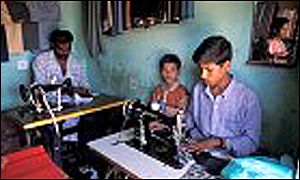 India is the world's third largest producer of cotton Environmentalists have attacked the Indian government for permitting the growth of genetically modified cotton. Critics said the government was working in the interests of multinational companies, not Indian farmers,
Indian Agriculture Minister Agit Singh told the BBC's World Business Report that approval had only been granted after a thorough investigation. "I do realise people are worried - they have concerns", he said. "That's why we have tested very extensively over the last several years." Poor yields Tests have been carried out on three varieties of seeds, which will be the only types of GM cotton permitted. India is the world's third largest producer of cotton. Although it devotes more land than any other country to growing cotton, Indian yields are smaller. Last year China tripled its production of cotton after introducing the Bt variety. India's vital textile industry could suffer if the prices of locally-grown cotton prove uncompetitive. Dissent But according to environmental campaigner Vandana Shiva Bt cotton is a bad idea for India. In the US, cotton growers only choose GM varieties under duress. "Farmers are not totally free. In the US they are totally under corporate control," she said. Farmers in the US were dependent on the big corporations and plant what they were given, she said. "India has had debates on GM, Europe has had debates on GM - because we are democratic societies," she said. She maintained that although GM seeds are used it China, this did not reflect the true choice of farmers, who lived in a totalitarian society. Contamination fears Ganesh Nochur of Greenpeace in India said that although some local farmers wanted to use GM seeds, there was dissent and concern about the impact of all genetically-modified organisms. He argued that a day would come when there would be huge demand for non-GM cotton. "We must not ignore the fact that China is not a home of the genetic diversity of cotton - India is," Ms Shiva said. "Cotton evolved in India. We still have 600 varieties growing in Gujarat - the problem of genetic contamination is far more serious in India." Decision supported But Dr Robert Bradnock of Kings College in London argued that India could gain from the switch. There were many farmers in India who had been desperately keen to access GM crops - particularly cotton, he said. "The scientific evidence is absolutely clear that there is no reason yet to suspect that GM, and indeed other GM crops, are necessarily damaging," he said. "When you look at the scientific evidence, the real question is: who do you believe? "Clearly Greenpeace and other agencies don't accept some of the scientific evidence." But many scientists, even those not working for seed firms, argued consumers have nothing to fear from properly tested crops, he said. | |
See also:  Internet links: The BBC is not responsible for the content of external internet sites Top Business stories now:  Links to more Business stories are at the foot of the page. | |||||||||||||||||||||||||||||||||||||||||||
|
Links to more Business stories |
 | | ^^ Back to top News Front Page | World | UK | UK Politics | Business | Sci/Tech | Health | Education | Entertainment | Talking Point | In Depth | AudioVideo ---------------------------------------------------------------------------------- To BBC Sport>> | To BBC Weather>> ---------------------------------------------------------------------------------- © MMIII|News Sources|Privacy  |





 TALKING POINT
 GM crops
 E-mail this story to a friend