
|
 |
 | | | | | |||||||||||||||||||||||||||||||||||
| | You are in: Business | |||||||||||||||||||||||||||||||||||||
 | | Friday, 15 March, 2002, 12:37 GMT Uganda roots out tax corruption 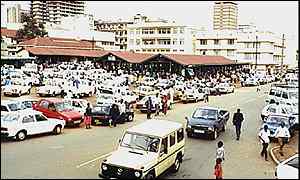 Corruption has flourished in vehicle licensing A three-month judicial probe into Uganda's tax authority has started to root out "massive" corruption and boost tax revenues. Tax collection by the Uganda Revenue Authority (URA) in the last two financial years fell to 11.3% of gross domestic product, well below the sub-Saharan average of 16%. "The inquiry is happening because of the corruption. You name it, it's there," AnneBritt Aslund, a Swedish national who was appointed to head the URA, told BBC News Online.
Finance Minister Gerald Sendaula hopes higher tax revenues will cut the country's dependence on foreign donors for budgetary support. "We need to clean it up if we are to improve our revenue collection, which is not only done by introducing new taxes but also by improving administration," he said. Declaration of interests Team conducting the independent inquiry into the URA is headed by Justice Julia Sebutinde. In the last two years she has led high profile anti-corruption probes into the country's police force and defence ministry. "We launched an anti-corruption programme in January and asked URA staff to declare their assets and interest, and of their relatives too," Ms Aslund said. The declarations will be handed over to the inquiry along with other documents. "We hope to complete the inquiry in three months and boost revenue collection to 15% easily within a few years," she said. "Also we plan to computerise - at the moment there are a lot of manual procedures - which will help us achieve that target." Mr Aslund also hopes to improve wages and working conditions for staff, which she identified as another key reason for corruption. Economic outlook At present, international donors fund slightly more than 50% of the country's budget, and all of its development budget. The government expects a 30bn Ugandan shilling (�12.2m) shortfall in export revenues this year because of the strength of the currency. Ugandan growth has been cut back to about 6% by a fall in world coffee prices, one of its major exports, after average annual growth of 6.5% in the 1990s. Ministry of Economic Affairs director Keith Muhakanizi said coffee exports, which, in the 1990s accounted for 64% of foreign exchange earnings, had fallen to 25% this year after a collapse in world prices. Despite a debt write-off of $1bn over 20 years by foreign lenders, Uganda is still hobbled by interest payments on foreign debt of $3.6bn. | |
See also:  Internet links: The BBC is not responsible for the content of external internet sites Top Business stories now:  Links to more Business stories are at the foot of the page. | |||||||||||||||||||||||||||||||||||
|
Links to more Business stories |
 | | ^^ Back to top News Front Page | World | UK | UK Politics | Business | Sci/Tech | Health | Education | Entertainment | Talking Point | In Depth | AudioVideo ---------------------------------------------------------------------------------- To BBC Sport>> | To BBC Weather>> ---------------------------------------------------------------------------------- © MMIII|News Sources|Privacy  |




 E-mail this story to a friend