
|
 |
 | | | | | ||||||||||||||||||||||||||||||||||||||||||||||||||||||
| | You are in: Business | ||||||||||||||||||||||||||||||||||||||||||||||||||||||||
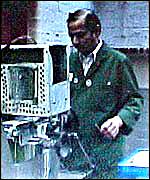
 | | Friday, 22 March, 2002, 08:21 GMT Manufacturing heartland loses lifeblood  Kamela packs up a whistle
Part of a series of special reports on the state of British manufacturing  All across the Midlands, thousands of people have been working for the same company for more than 30 years. They go to work early in the morning, sit at work benches or in front of machines and perform the same repetitive tasks all day. Some have followed fathers and uncles into the manufacturing industry, which until recently used to be the main employer of the Midlands' young men and women.
In Solihull, workers at Land Rover build 11 cars an hour. A few miles away on the outskirts of Birmingham city centre, 62 employees at Acme Whistles turn out 5-6,000 whistles in an eight-hour shift. Working overtime Within Acme's packaging room, Kamela spends her days sitting on a tall chair polishing whistles and wrapping them in tissue paper. She has worked here for 25 years.
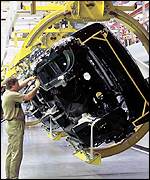
In a quieter space, Linda, June and Pam hammer parts together as they listen to their walkmans. Take away the walkmans and the scene would have been the same 50 years ago - except there might have been more people in the room. Modern manufacturing Things could not be more different at Land Rover, where Ford has invested millions in improving the production lines.
Years ago, workers would have been lying on their backs underneath the car. Since the US car company Ford took over Land Rover in 2000 and invested millions, the Midlands car maker has found a new lease of life. But, even though Land Rover's premium brand has shielded it from the worst of the global slowdown, it still contends with the same problems that affect smaller companies like Acme Whistles. Common ground The strong pound, weaknesses in the national infrastructure, competition from the Far East and government regulations have all increased the stranglehold on UK manufacturers. In recent years, all these factors have made survival the priority for some companies, rather than growth. "In the last three months, we haven't made any money," says Russell Luckock, managing director of an engineering company, called A.E. Harris. "We have suffered a 20% downturn in revenue." Ian Greaves, a partner at KPMG in Birmingham, has noticed that the number of receiverships in the Midlands has increased sharply in the last six months. Even Land Rover found itself at the sharp end of this when an insolvent supplier - UPF-Thomson - threatened to halt production of the Discovery vehicle. Land Rover is now lobbying the government for a change in the UK's insolvency laws. Fighting on all sides But it is also dog-eat-dog world in manufacturing - large car manufacturers have been forcing their suppliers to reduce prices for years. This has forced many suppliers to close up shop.
"The savings that we can offer are exceedingly limited." But the common enemy for many manufacturers seems be the government. Many are dismissive of the high-profile campaign by Trade and Industry Secretary Patricia Hewitt to back manufacturing. "I have no faith in the government, it's all talk, talk," says Mr Luckock of A.E. Harris. The consensus view is that Tony Blair's government is not interested in the sector and continues to heap red tape, in the form of superfluous regulations, on struggling employers. Grass roots Workers on the factory floor are also concerned. John Smith, an end-of-line team leader at Land Rover, says he worries constantly about what will happen to UK manufacturing in the years to come. If he had his time again, he would not choose a career in manufacturing, he says. And this is the biggest blow for British industry. Nobody wants to work in the sector anymore. Even Land Rover has problems recruiting enough graduates, says Simon Barker, the launch manager for the new Range Rover. Terry Wilkinson, a superintendent at Acme Whistles, laughs when asked if his two children will consider careers in manufacturing. "My daughter's into the performing art... And the lad is into computers and things like that," he says. At the end of the day, services and IT companies could starve manufacturing of the fresh blood and skills it so desperately needs. And without the right people, like John Smith, Kamela and Errol, manufacturing may lack the wherewithal to reinvent itself and overcome so many other formidable obstacles. | |
Internet links:  The BBC is not responsible for the content of external internet sites Top Business stories now:  Links to more Business stories are at the foot of the page. | ||||||||||||||||||||||||||||||||||||||||||||||||||||||
|
Links to more Business stories |
 | | ^^ Back to top News Front Page | World | UK | UK Politics | Business | Sci/Tech | Health | Education | Entertainment | Talking Point | In Depth | AudioVideo ---------------------------------------------------------------------------------- To BBC Sport>> | To BBC Weather>> ---------------------------------------------------------------------------------- © MMIII|News Sources|Privacy  |









 E-mail this story to a friend