
|
 |
 | | | | | |||||||||||||||||||||||||||||||||||||||||||||||||||
| | You are in: Business | |||||||||||||||||||||||||||||||||||||||||||||||||||||
 | | Wednesday, 6 March, 2002, 16:25 GMT Nigeria ditches IMF consultations 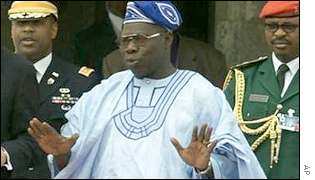 Obasanjo says 'that's enough' to the IMF Nigeria has ended informal consultations with the International Monetary Fund (IMF) in the interests of "political stability, democratic consolidation, credibility and accountability".
Analysts say the move was made to ensure President Olusegun Obasanjo's government could deliver a vote winning budget ahead of elections next year. The government said it would implement policies that better serve Nigerians. The informal monitoring arrangement had been in place since the IMF approved an extension to a one-year standby loan in October. Vote winner? Pat Utomi of the Lagos Business School said the decision was to win votes but was unconcerned about its effect on creditors. "On its own that decision is neither good nor bad," Mr Utomi said.
"The question is, will they be able to have the level of discipline required to deal with creditors and all of those things without an IMF kind of pat on the back?," he said. "The bottom line is that there are not too many people out there in the world who would like to see a crisis in Nigeria ... so even without an IMF facility, and if they are still earning enough from oil to do some basic servicing of debt and other bills, they should be OK," he added. IMF approval of economic policies is necessary for foreign debt relief on about $30bn in loans, mostly from the Paris Club of creditors. IMF 'ignores' achievements President Obasanjo, who inherited an economy wrecked by 15 years of corrupt military rule in 1999, is expected to run for a second term in office. He has been criticised for failing to end prolonged economic stagnation and create jobs for the millions of unemployed.
Joblessness is considered a major factor in ethnic and religious violence that has claimed more than 3,000 lives since Mr Obasanjo took office. Mr Ciroma said the IMF had ignored clear and measurable achievements since Mr Obasanjo took office including its debt rescheduling accord with the Paris Club, a 200% expansion in electricity generation, deregulation of fuel marketing, improvements in water supply and telecommunications and the privatisation programme. "Between 2000 and 2001 real GDP [gross domestic product] grew at a faster pace than at any time since 1991," he said. | |
See also:  Internet links: The BBC is not responsible for the content of external internet sites Top Business stories now:  Links to more Business stories are at the foot of the page. | |||||||||||||||||||||||||||||||||||||||||||||||||||
|
Links to more Business stories |
 | | ^^ Back to top News Front Page | World | UK | UK Politics | Business | Sci/Tech | Health | Education | Entertainment | Talking Point | In Depth | AudioVideo ---------------------------------------------------------------------------------- To BBC Sport>> | To BBC Weather>> ---------------------------------------------------------------------------------- © MMIII|News Sources|Privacy  |




 E-mail this story to a friend