
|
 |
 | | | | | ||||||||||||||||||||||||||||||||||||||||||
| | You are in: Business | ||||||||||||||||||||||||||||||||||||||||||||
 | | Thursday, 28 February, 2002, 16:32 GMT US economy shows surprise strength 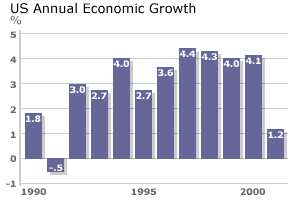 The US economy grew at a much faster rate than previously thought during the last three months of 2001. The latest figures show that exceptionally strong consumer spending propelled the economy to grow at an annual rate of 1.4%.
It is the strongest quarterly gain for the year and supports the belief that the US economy has already turned the corner. While most analysts now agree that the US economy is past the worst, many are unsure as to the depth and speed of the recovery. Questionable caution The growth of 1.4% during the last quarter is a dramatic change of fortune from the 1.3% contraction suffered during the previous three months. The strong news has led some analysts to question the caution of Federal Reserve chairman Alan Greenspan. Speaking before Congress on Wednesday, Mr Greenspan warned that "an array of influences" would moderate the speed of recovery. But he did concede that even a subdued recovery would be a "truly remarkable performance" given the stock market slump and the 11 September attacks. A growth rate of 1.4% also means that another interest rate cut is more unlikely. The Fed slashed interest rates 11 times last year, but kept rates on hold last month because of the glimmer of a recovery. Spending power The surprise strength is largely due to the fact that Americans kept on spending money, despite the psychological impact of 11 September and the tide of job cuts. Consumers, whose spending accounts for two thirds of all economic activity in the US, notched up spending on costly manufactured goods like cars at the fastest rate in fifteen years. Brisk government spending was another factor to help spur the economy. But businesses continued to cut back on spending on new plants and equipment, reducing investment at a rate of 13%, demonstrating the underlying weakness in sentiment. The White House stressed, however, that an economic stimulus plan was still needed to avert a "jobless recovery". Equity markets did not react significantly to the news, balancing the good news against the reduced likelihood of an interest rate cut. But these are encouraging figures for the stock markets in the longer term. "This is good news for the equity market...as the economy recovers, corporate profits and earnings should to better," said Stan Shipley, senior economist at Merrill Lynch Government Securities. Canada cheers Also on Thursday, Canada avoided the dreaded two consecutive quarters of economic shrinkage that would have signalled recession. Official statistics showed the economy grew 2% on an annualised basis in the fourth quarter of 2001 following a 0.6% decline on an annualised basis the previous quarter. Overall economic growth for 2001 came out at 1.5% - the weakest annual growth since 1992. | |
See also:  Internet links: The BBC is not responsible for the content of external internet sites Top Business stories now:  Links to more Business stories are at the foot of the page. | ||||||||||||||||||||||||||||||||||||||||||
|
Links to more Business stories |
 | | ^^ Back to top News Front Page | World | UK | UK Politics | Business | Sci/Tech | Health | Education | Entertainment | Talking Point | In Depth | AudioVideo ---------------------------------------------------------------------------------- To BBC Sport>> | To BBC Weather>> ---------------------------------------------------------------------------------- © MMIII|News Sources|Privacy  |


 E-mail this story to a friend