|
 |
 | | | | | | |||||||||||||||||||||||||||||||||||||||||||||||||||||||||||||||||||||||||||||||||||||||||||||||||||||||||||||||||||||||||||||||||||||||||||||||||||||||||||||||||||||
| | | You are in: Business | |||||||||||||||||||||||||||||||||||||||||||||||||||||||||||||||||||||||||||||||||||||||||||||||||||||||||||||||||||||||||||||||||||||||||||||||||||||||||||||||||||||||
|
| | Thursday, 3 October, 2002, 07:35 GMT 08:35 UK EU prepares for US nuclear trade war 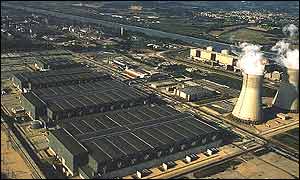 US accuses Eurodif of subsidising exports to the US
The European Commission is preparing to retaliate against US import duties on European uranium, raising fears of another damaging trade dispute. Earlier this year the US Department of Commerce imposed tariffs on European producers of low enriched uranium (LEU), claiming they received unfair state subsidises.
An EU spokeswoman told BBC News Online it had failed to reach an "amicable" solution after months of talks with the US and would now seek to refer the case to the World Trade Organisation (WTO). "We are not going to sit and wait," the spokeswoman for Trade Commissioner Pascal Lamy said. "We will send our final consultation documentation to our member states in the next couple of weeks and do not expect any obstacles". The dispute over uranium the follows spats between the US and Europe over corporate tax breaks and trade in steel, bananas and beef. LEU is used to fuel in nuclear power plants and is not weapons grade material. Nuclear refinement Two years ago, the only US enricher of uranium, the recently privatised US Enrichment Corporation (USEC), lodged a complaint against the French government's Eurodif and Urenco, a UK-Dutch-German government consortium. An investigation last year by the International Trade Commission (ITC), the US body which recommends the imposition of duties, reported that "subsidised" European LEU was harming the domestic industry.
As a result, Eurodif now pays an extra 34% duty, and Urenco 2.23%, on exports to the US. The European Commission estimates USEC will receive about $100m in extra annual income from the duties. "It has an impact on us of several million dollars a year, but its not crippling," Mark Elliot, general manager of marketing at Urenco, told BBC News Online. "They accused Urenco of receiving state subsidies in the 70s and 80s and the ITC established that we were innocent of most accusations, but had not fully repaid a small number of subsidies according to their rules." Review due Urenco, which is part owned by British Nuclear Fuels, disputes the findings and plans to appeal to the US Court of International Trade.
The ITC also found state-owned power company Electricite de France (EdF) had bought Eurodif's uranium at about 13% above market prices, and that the proceeds were then used to bankroll the sale the metal in the US at 19.5% below USEC prices. The US Department of Commerce is expected to review the case in January. Russian connection USEC has a monopoly on uranium enrichment in the US and is the world's leading supplier of fuel to nuclear power plants. The company is also the only middleman for recycling weapons grade material from decommissioned Russian nuclear warheads. The US government hopes the deal will keep the material out of terrorist hands. But Brussels believes USEC's state-conferred monopoly over the Russian reprocessing should have been considered by the ITC in its decision. The duties have been hailed by USEC as being in the "long term interests" of both the company and US national security. Private power "We're not contemplating a counter claim against USEC, but they themselves have had government subsidies in the past," Mr Elliott said. The US company, which was privatised amid heavy criticism in 1998, operates government-owned enrichment plants in Kentucky and Ohio. Since privatisation it has shut down plants, sacked workers, and raised money by selling back to suppliers electricity for uranium processing bought under long-term contracts. Despite the exclusive Russian contract and the duties on its European competitors, USEC's share price has halved to about $7 since floatation. European threat USEC could soon also face domestic competition from the Urenco, which reputedly produces the cheapest enriched uranium in the world, has the newest technology and is expanding capacity. It is part of a consortium that plans to build a $1.1bn uranium processing plant in the US, the first since the 1980s, which would break USEC's monopoly. The output from the plant, which could be operational by 2007, would not be subject to duties and be significantly cheaper to operate. Urenco's enrichment sites are located at Capenhurst in the UK, at Gronau in Germany and at Almelo in The Netherlands. | |
See also:  26 Sep 02 | Business 30 Aug 02 | Business 07 Dec 01 | Business 24 Jul 01 | Business 02 Jul 01 | Business 07 Jun 01 | Business 11 Apr 01 | Business Internet links: The BBC is not responsible for the content of external internet sites Top Business stories now: Links to more Business stories are at the foot of the page. | |||||||||||||||||||||||||||||||||||||||||||||||||||||||||||||||||||||||||||||||||||||||||||||||||||||||||||||||||||||||||||||||||||||||||||||||||||||||||||||||||||||
| |
|  E-mail this story to a friend E-mail this story to a friend |
| |
| Links to more Business stories |
| | | ||
 | ||||
 | | Back to top
| ||
| ---------------------------------------------------------------------------------- To BBC Sport>> | To BBC Weather>> | To BBC World Service>> ---------------------------------------------------------------------------------- © MMIII | News Sources | Privacy |