|
 |
 | | | | | | ||||||||||||||||||||||||||||||||||||||||||||||||||||||||||||||||||||||||||||||||||||||||||||||||||||||||||||||||||||||||||||||||||||||||||||||||||||||||||||||||||||||||||||||||||||||||||||||||||||||||||||
| | | You are in: Asia-Pacific | ||||||||||||||||||||||||||||||||||||||||||||||||||||||||||||||||||||||||||||||||||||||||||||||||||||||||||||||||||||||||||||||||||||||||||||||||||||||||||||||||||||||||||||||||||||||||||||||||||||||||||||||
|
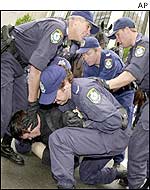
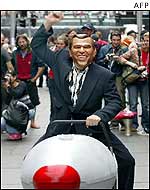
| | Thursday, 14 November, 2002, 03:39 GMT Sydney protests target trade talks 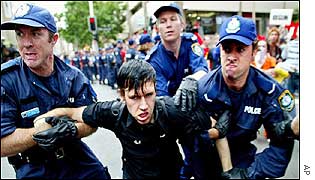 Sydney police made several arrests About 1,000 demonstrators have taken to the streets of Sydney in the first of a series of protests against an informal meeting of trade ministers from more than 20 countries. The marchers also targeted the US consulate and the offices of the company that runs Australia's detention centres for asylum seekers.
Patents on medicines and farm subsidies are key issues on the agenda of the talks hosted by Australia. The trade ministers hope to make progress in global free trade negotiations ahead of a major World Trade Organisation meeting in Mexico next year. The two-day meeting is being held at the tightly guarded Sydney Olympic Park venue in the city's western suburbs. The protesters defied a police ban on demonstrations and began marching near the US consulate and Sydney office of the Department of Foreign Affairs and Trade. Organisers said several thousand were expected to attend a rally in a city park later on Thursday. "The point of today's demonstrations is to have a very vibrant protest against the unfair trade policies of the World Trade Organisation, which enforce poverty on millions of people around the world," said one of the organisers of the protests, Simon Butler. Anti-war demonstration Protesters set up barricades at some road junctions that briefly disrupted rush-hour traffic. They were also demonstrating against a possible US-led war with Iraq. Environmentalists, anti-war groups and members of international charities like Oxfam joined the protests. They accuse the 145-nation WTO of seeking to open up world markets for big business rather than to benefit the poor. Plea by Annan At a meeting in Doha a year ago the WTO agreed that developing countries should be allowed to override patents and make needed drugs themselves to deal with public health crises such as HIV/Aids.
In a message to the trade ministers meeting in Sydney the UN Secretary General, Kofi Annan, called for urgent steps to ensure that affordable medicines and vaccines are made available to millions of people suffering from HIV/Aids and other serious diseases. "He regards this as both a moral imperative and an economic and social necessity," his spokeswoman Hua Jiang said. Agricultural policy is also highly controversial, with the European Union and Japan under pressure to make progress towards reducing farm subsidies and barriers to food imports. | |
See also:  09 Nov 02 | Country profiles 03 Sep 02 | Business 06 Nov 02 | Business Top Asia-Pacific stories now: Links to more Asia-Pacific stories are at the foot of the page. | ||||||||||||||||||||||||||||||||||||||||||||||||||||||||||||||||||||||||||||||||||||||||||||||||||||||||||||||||||||||||||||||||||||||||||||||||||||||||||||||||||||||||||||||||||||||||||||||||||||||||||||
| |
|  E-mail this story to a friend E-mail this story to a friend |
| |
| Links to more Asia-Pacific stories |
| | | ||
 | ||||
 | | Back to top
| ||
| ---------------------------------------------------------------------------------- To BBC Sport>> | To BBC Weather>> | To BBC World Service>> ---------------------------------------------------------------------------------- © MMIII | News Sources | Privacy |