|
 |
 | | | | | | ||||||||||||||||||||||||||||||||||||||||||||||||||||||||||||||||||||||||||||||||||||||||||||||||||||||||||||||||||||||||||||||||||||||||||||||||||||||||||||||||||||||||||||||||||||||||||
| | | You are in: Asia-Pacific | ||||||||||||||||||||||||||||||||||||||||||||||||||||||||||||||||||||||||||||||||||||||||||||||||||||||||||||||||||||||||||||||||||||||||||||||||||||||||||||||||||||||||||||||||||||||||||||
|
| | Friday, 8 November, 2002, 12:15 GMT Jiang's message of change 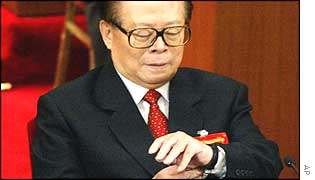 Mr Jiang has an eye on his future legacy Jiang Zemin's work report to the 16th Communist Party Congress did not contain anything new or unexpected but it did reinforce the message that the Party is changing, leading China analysts said.
"The emphasis (of the Congress) is on leadership succession... rather than on policy innovations," Joseph Cheng, professor of political science at City University of Hong Kong, told BBC News Online. He said that even Mr Jiang's recommendation that entrepreneurs be invited to join the Party referred to a practice which had already been going on for some time. But Mr Jiang's call for this process to be formalised was significant, Professor Cheng said. "What is significant is the Party is repositioning itself. It is no longer a revolutionary party. It is a governing party, and of course it wants to broaden its base of support," he said. Li Xiguang, a commentator at Qinghua University, agreed that the Party is seeking to become more representative of modern China. "The Communist Party itself is changing from fundamentally a working class party, into a party that will represent not only the working class, but now it's going to seek to represent the middle class," he told the BBC's Today programme. Political reform But he stressed that Mr Jiang "made it very clear" in his speech that he wants "the Communist Party to maintain absolute control of the army and absolute stability of society".
"He didn't say anything about the political reform the Western people are predicting or are expecting. Organised parties or political organisations I don't think will be allowed in the future if they are against the Communist Party," Mr Li said. Graham Hutchings, consultant on China and editor at Oxford Analytica, agreed that the Party was changing. Making friends in business He said that before Tiananmen Square, the Party had seemed "quite keen on withdrawing from life", keeping itself separate from the business community, but that it had now concluded this was no longer wise. "The idea that the entrepreneurs are going to grow up as a separate party force is unacceptable, so they're going to be co-opted," he said. "(The Party) now realise(s) that the best way to stay in power is to let these boundaries get fuzzy," Mr Hutchings said. But Mr Hutchings warned that the Party could be making a pact with the devil. He said the Party had recognised that "in a rapidly changing economy there's going to be winners and losers and it has sided with the winners". However, he stressed that this was not a stable model for development, and could "come unstuck", particularly if the economy faltered. | |
Internet links:  The BBC is not responsible for the content of external internet sites Top Asia-Pacific stories now: Links to more Asia-Pacific stories are at the foot of the page. | ||||||||||||||||||||||||||||||||||||||||||||||||||||||||||||||||||||||||||||||||||||||||||||||||||||||||||||||||||||||||||||||||||||||||||||||||||||||||||||||||||||||||||||||||||||||||||
| |
|  E-mail this story to a friend E-mail this story to a friend |
| |
| Links to more Asia-Pacific stories |
| | | ||
 | ||||
 | | Back to top
| ||
| ---------------------------------------------------------------------------------- To BBC Sport>> | To BBC Weather>> | To BBC World Service>> ---------------------------------------------------------------------------------- © MMIII | News Sources | Privacy |