|
 |
 | | | | | | |||||||||||||||||||||||||||||||||||||||||||||||||||||||||||||||||||||||||||||||||||||||||||||||||||||||||||||||||||||||||||||||||||||||||||||||||||||||||||||||||||||||||||||||||||||||||||||||||||||||||||||
| | | You are in: Asia-Pacific | |||||||||||||||||||||||||||||||||||||||||||||||||||||||||||||||||||||||||||||||||||||||||||||||||||||||||||||||||||||||||||||||||||||||||||||||||||||||||||||||||||||||||||||||||||||||||||||||||||||||||||||||
|
| | Monday, 5 August, 2002, 16:06 GMT 17:06 UK Independence call divides Taiwanese 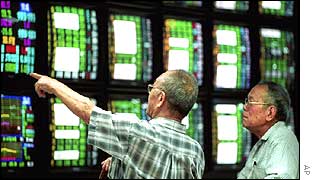 Stocks tumbled following the president's speech
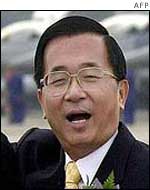
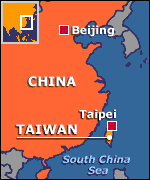
Taiwanese President Chen Shui-bian's traditionally pro-independence leanings have won him a large following over the years across the island and helped him to become its leader two years ago. But his latest comments in relation to Taiwan's relationship with its giant neighbour China seem to have given many Taiwanese people food for thought about what he is up to.
"It is not necessary for our president to talk about independence. "I don't think China will take any military action now, but this kind of talk makes us feel mentally insecure." In a speech on Saturday, Mr Chen backed the idea of legislation so that a referendum on formal independence could be passed in the future. He also said Taiwan and China were two separate countries. 'Miscalculation' But even the president himself has been surprised by the reaction to the speech, analysts say.
"He miscalculated," said Wei Yung, president of the Vanguard Institute for Policy Studies, a Taipei think-tank which researches cross-straits relations. "He thought the people's reaction would be more positive but the stock market plummeted and that is one of his main concerns. "He did not expect reaction from entrepreneurs to be negative and China's reaction was also harsher than he expected."
The extent of the negative reaction helps explain why Mr Chen's Democratic Progressive Party (DPP) has gone out of its way since his speech to emphasise there is actually no change in Taiwan's policy towards China But although that might calm some nerves - and perhaps those of Taiwan's most powerful friend the US - it is not putting everyone's mind at rest on the island. Teacher Michelle Ou said that even though she was pro-independence she did not want the president to provoke China. "We might not be able to take the result," she said. China's golden goose Numerous surveys have shown most Taiwanese prefer a political relationship with China, a continuation of the status quo, and fear the consequences of any declaration of independence.
"What would be the point of that? Taiwan's importance lies in its economic prosperity and we put a lot of money into China," Ms Soong said. "The economic advantage is all we have. And, if Chen is such a bad chess player, he won't get a second term." 'Ready to fight' Mr Chen almost certainly had his eye on future elections when he gave his speech to pro-independence activists at the weekend. And along with some hardliners within his party, who were impressed with his comments, he also impressed some ordinary people.
"If China does attack I am ready to fight, although I don't think it will do that." Student Jiong Ming-jin, 25, also backed her president. "I agree with him. China always talks about attacking, but never does," she said. "I don't believe it will, although I know I could be living in a bubble." Risky business Although the DPP is the largest party in parliament, it does not have an outright majority and it would be difficult to get any referendum bill passed. Some analysts believe the negative reaction to Mr Chen's speech has already sounded the death knell for such a bill in the present climate. "I don't think the DPP would even back it now, let alone the opposition, " said Emile Sheng, a political science professor at Soochow University in Taipei. Even if legislation was soon passed, it does not necessarily follow that pro-independence supporters would then vote for independence from the mainland. "I certainly wouldn't vote any time soon," said Michelle Ou. "It's far too risky." | |
See also:  05 Aug 02 | Asia-Pacific 05 Aug 02 | Asia-Pacific 13 Jul 02 | Asia-Pacific 25 Jan 02 | Asia-Pacific Internet links: The BBC is not responsible for the content of external internet sites Top Asia-Pacific stories now: Links to more Asia-Pacific stories are at the foot of the page. | |||||||||||||||||||||||||||||||||||||||||||||||||||||||||||||||||||||||||||||||||||||||||||||||||||||||||||||||||||||||||||||||||||||||||||||||||||||||||||||||||||||||||||||||||||||||||||||||||||||||||||||
| |
|  E-mail this story to a friend E-mail this story to a friend |
| |
| Links to more Asia-Pacific stories |
| | | ||
 | ||||
 | | Back to top
| ||
| ---------------------------------------------------------------------------------- To BBC Sport>> | To BBC Weather>> | To BBC World Service>> ---------------------------------------------------------------------------------- © MMIII | News Sources | Privacy |