|
 |
 | | | | | | |||||||||||||||||||||||||||||||||||||||||||||||||||||||||||||||||||||||||||||||||||||||||||||||||||||||||||||||||||||||||||||||||||||||||||||||||||||||||||||||
| | | You are in: Asia-Pacific | |||||||||||||||||||||||||||||||||||||||||||||||||||||||||||||||||||||||||||||||||||||||||||||||||||||||||||||||||||||||||||||||||||||||||||||||||||||||||||||||||
|
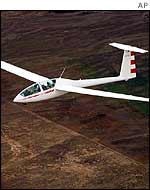
| | Wednesday, 24 July, 2002, 17:38 GMT 18:38 UK Fossett tests glider for record flight 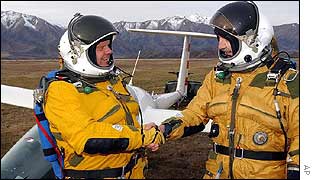 Pressurised suits are needed for such high altitudes American adventurer Steve Fossett has taken a trial flight in the glider he hopes will bring him the world gliding altitude record. He and co-pilot Einar Enevoldson reached 2,000 metres (6,600 feet) - well short of the 14,938 m (49,295 ft) record - over the town of Omarama on New Zealand's South Island.
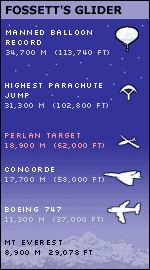
Mr Fossett became the first person to fly solo around the world in a hot-air balloon earlier this month. Omarama has been chosen for the attempt because it is east of the South Island's alpine range, and it is hoped that "mountain waves" of wind will take the glider into the stratosphere. Mr Enevoldson is a former test pilot for Nasa, the US space agency. Mr Fossett told Radio New Zealand that the attempt - called the Perlan Project - had many dangers. "The air gets very thin up there. It is sometimes called the coffin corner," he said. Powerful updrafts "If you go too fast the aeroplane can over-speed and disintegrate. If you go too slow it can stall. It is a very narrow difference." The glider is expected to reach speeds of up to 300 kilometres per hour (186 miles per hour) when it reaches the powerful updrafts fed by winds swirling around the Antarctic at this time of the year. But to reach the "mountain waves" of winds, Mr Fossett needs strong low-level breezes, and since he arrived in New Zealand on Sunday, there has been very little wind. The tycoon said he enjoyed his 30-minute flight, but was disappointed by the lack of wind.
The two men tested the glider's emergency parachute as it landed and became accustomed to the pressurised space suits. "It is very confining, you can easily get claustrophobic," Mr Fossett said. "In a lot of ways it feels like it is constricting your breathing, but it is not." The team are not expected to make another flight before Friday. Mr Fossett said that if the weather was not ideal by mid-August the attempt would probably switch to Sweden in December. Mars lessons He insisted that the altitude attempt also had a scientific purpose. "It is going to be helpful in learning how to fly craft in the atmosphere of Mars," he said. "It is the same density there as where we will be flying the glider." The current altitude record for a glider is held by American Bob Harris, who flew to 14,938 m (49,000 ft) over California's Sierra Nevada range in 1986. Mr Fossett, 58, has said that he would eventually like to reach an altitude of 30,500 m (100,000 ft) - the very edge of space. | | See also:  22 Jul 02 | Asia-Pacific 20 Sep 02 | Science/Nature 03 Jul 02 | Asia-Pacific 01 Jul 02 | Americas Top Asia-Pacific stories now: Links to more Asia-Pacific stories are at the foot of the page. | |||||||||||||||||||||||||||||||||||||||||||||||||||||||||||||||||||||||||||||||||||||||||||||||||||||||||||||||||||||||||||||||||||||||||||||||||||||||||||||||
| |
|  E-mail this story to a friend E-mail this story to a friend |
| |
| Links to more Asia-Pacific stories |
| | | ||
 | ||||
 | | Back to top
| ||
| ---------------------------------------------------------------------------------- To BBC Sport>> | To BBC Weather>> | To BBC World Service>> ---------------------------------------------------------------------------------- © MMIII | News Sources | Privacy |