|
 |
 | | | | | | ||||||||||||||||||||||||||||||||||||||||||||||||||||||||||||||||||||||||||||||||||||||||||||||||||||||||||||||||||||||||||||||||||||||||||||||||||||||||||||||||||||||||||
| | | You are in: Asia-Pacific | ||||||||||||||||||||||||||||||||||||||||||||||||||||||||||||||||||||||||||||||||||||||||||||||||||||||||||||||||||||||||||||||||||||||||||||||||||||||||||||||||||||||||||||
|
| | Tuesday, 23 July, 2002, 00:19 GMT 01:19 UK Analysis: Megawati's first year 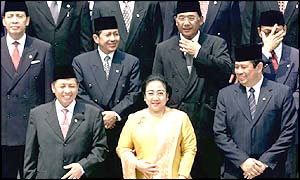 Megawati was sworn into office on 23 July 2001
But hopes that she would set in train meaningful reform for the country's judiciary and political system have been frustrated as the new president's conservative instincts have become clearer.
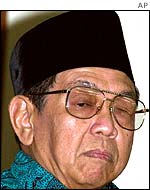
In contrast to her predecessor Abdurrahman Wahid, Megawati has not fired any cabinet members from her coalition, which groups together her nationalist PDI-P party with others including the Islamist United Development Party, which had earlier opposed her presidency on the basis of gender. "She has brought about stability, Megawati has given a much clearer direction, compared to (President Wahid) who constantly changed his mind," says Professor Juwono Sudarsono, a political commentator from the University Of Indonesia who served as defence minister under President Wahid. The military, another institution with political clout, has given her strong support. Her assessment of the situation in the strife-torn north-western province of Aceh that the government needs to be tougher against the separatists has found favour in the military.
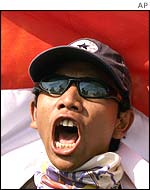
This is a sharp contrast to the situation under President Wahid, whose relationship with the military became strained towards the end of his presidency. "(President Wahid) tried to meddle too much in the internal workings of the Armed Forces, Megawati has not done that, " says Juwono. Critics' view It is within her own party and the student movement that Megawati is having increasing problems. Student demonstrators call her "Megawati Suhartoputri", or daughter of Suharto, complaining how little has changed since the former president's autocratic rule ended in 1998. The students accuse President Megawati of failing to carry out reforms. They want her to stamp out the so called KKN, Korupsi, Kolusi, and Nepotisme, or corruption, collusion and nepotism. They also point out that her government has made little progress in getting Indonesia out of a five-year economic crisis. "Corruption has become much worse under Megawati," says former President Wahid. While he cannot be expected to be an impartial observer, there are those within her party who are worried by Megawati's failure to crack down on corruption. Three PDI-P Assembly members have resigned in protest over the past year. Earlier this month, the party voted with the Golkar party to ensure that its leader, Akbar Tandjung, escaped political censure over corruption allegations. The irony that her party is in cahoots with Golkar, former President Suharto's political party, is not lost on her supporters.
Another issue which has damaged Megawati's credibility as a reformer is her hesitation in backing direct presidential elections. These are due to take place in 2004 but Megawati said she was concerned they might spark widespread unrest. Mixed economy Critics used the issue to argue that she wanted to preserve the authoritarian nature of Suharto's regime. Political stability has translated into a more stable economic environment. The Indonesian currency, the Rupiah, is stronger and the Jakarta Stock Exchange has performed well this year. Relations with the International Monetary Fund have improved considerably, though this angers those of her supporters who are opposed to IMF policies on privatisation and cutting subsidies. But other economic indicators are more worrying. Export earnings for the first six months are down from the same period last year, while there has been a net outflow of capital in the last four years to the tune of $10bn a year. While the country's economy is expected to grow at around 3% this year, that is not enough to absorb the 1.8 million Indonesians who enter the workforce each year. So the wider economic outlook is not bright. So far this has not translated into significant political problems for Megawati. So long as she enjoys the support of all the main political parties and the military, voices of dissent from within her party, and from students, are minor irritants. It has been a relatively trouble-free 12 months, but worsening economic conditions could make things a lot less comfortable. | |   See also: 17 Jul 02 | Asia-Pacific 26 Apr 02 | Asia-Pacific 23 Jul 01 | Asia-Pacific 22 Mar 02 | Asia-Pacific Internet links: The BBC is not responsible for the content of external internet sites Top Asia-Pacific stories now: Links to more Asia-Pacific stories are at the foot of the page. | ||||||||||||||||||||||||||||||||||||||||||||||||||||||||||||||||||||||||||||||||||||||||||||||||||||||||||||||||||||||||||||||||||||||||||||||||||||||||||||||||||||||||||
| |
|  E-mail this story to a friend E-mail this story to a friend |
| |
| Links to more Asia-Pacific stories |
| | | ||
 | ||||
 | | Back to top
| ||
| ---------------------------------------------------------------------------------- To BBC Sport>> | To BBC Weather>> | To BBC World Service>> ---------------------------------------------------------------------------------- © MMIII | News Sources | Privacy |