
|
 |
 | | | | | | |||||||||||||||||||||||||||||||||||||||||||||||||||||||||||||||||||||||||||||||||||||||||||||||||||||||||||||||||||||||||||||||||||||||||||||||||||||||||||||||||
| | | You are in: Asia-Pacific | |||||||||||||||||||||||||||||||||||||||||||||||||||||||||||||||||||||||||||||||||||||||||||||||||||||||||||||||||||||||||||||||||||||||||||||||||||||||||||||||||||
|
| | Wednesday, 17 July, 2002, 06:49 GMT 07:49 UK Burma 'terrorising ethnic minorities' 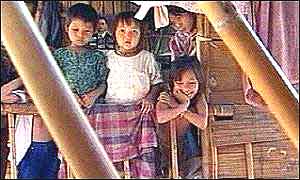 Many minorities have been forced to flee Burma Burma's military junta is carrying out a reign of terror against the country's ethnic minorities, a human rights group has said. The London-based watchdog, Amnesty International, said in a report that although human rights have improved in the capital, Rangoon, civilians in eastern Burma are battling to survive.
Burma's army subjects the Shan, Mon and Karen ethnic groups to forced labour, extortion and land confiscation, Amnesty said. And civilians accused of collaborating with ethnic rebels continue to be killed and tortured in the country, also known as Myanmar, according to the report. Case studies One 66-year-old man reported that he had been forced to work for the army - known as the tatmadaw - on and off for the last 50 years, and as recently as February this year.
"The Myanmar Government needs to ensure that the order reaches all levels of the military. In addition they must inform villagers of their rights in languages they understand," the report said. The plight of a man who was tortured by the military was also documented. A Shan villager told Amnesty how her friend, Aye Seng, died last December, a year after he was severely tortured by the army. "He told me he was beaten for five nights. He was virtually dead," she said. "When he came back his nose and eyes were dripping with blood from head injuries. "They accused him of giving rice to the SSA [Shan State Army rebel group]... but he didn't even have enough rice for himself. "He had no treatment - he dared not go into town." Constant demands Amnesty also said those interviewed reported that the military constantly demanded money and goods, and imposed punitive taxes on their rice crops. Plantations were even seized and farmers forced off their land to work for the army without pay. But even if the minorities decided to flee to neighbouring Thailand, they faced falling into the hands of people traffickers, Amnesty said. "In February this year, Thai police found 20 bodies of Karen migrants near the border which were blindfolded, had their wrists tied and their throats cut," the report said. Amnesty did stress that there have been several improvements in human rights in Burma over the last 18 months. The government has allowed international delegations to visit and the International Labour Organisation (ILO), which has been highly critical of the government's rights record, has been able to set up an office in Rangoon. | | See also:  07 Jun 02 | Asia-Pacific 10 Jul 00 | Asia-Pacific 25 Feb 02 | Country profiles Internet links: The BBC is not responsible for the content of external internet sites Top Asia-Pacific stories now: Links to more Asia-Pacific stories are at the foot of the page. | |||||||||||||||||||||||||||||||||||||||||||||||||||||||||||||||||||||||||||||||||||||||||||||||||||||||||||||||||||||||||||||||||||||||||||||||||||||||||||||||||
| |
|  E-mail this story to a friend E-mail this story to a friend |
| |
| Links to more Asia-Pacific stories |
| | | ||
 | ||||
 | | Back to top
| ||
| ---------------------------------------------------------------------------------- To BBC Sport>> | To BBC Weather>> | To BBC World Service>> ---------------------------------------------------------------------------------- © MMIII | News Sources | Privacy |






