To see how rescue workers go about their vital work, click on the links below. 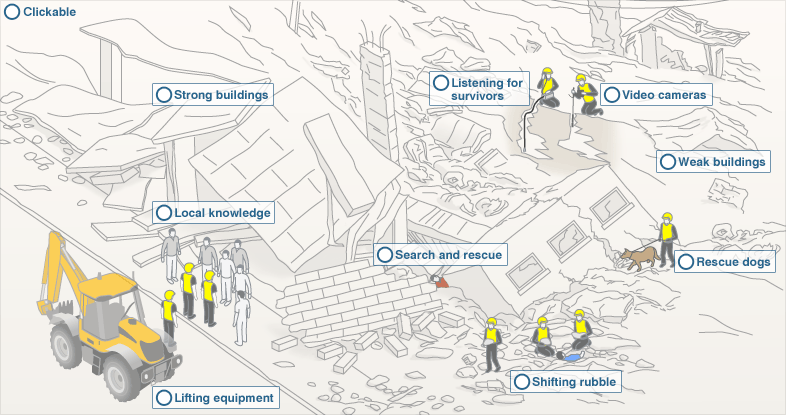 Strong buildings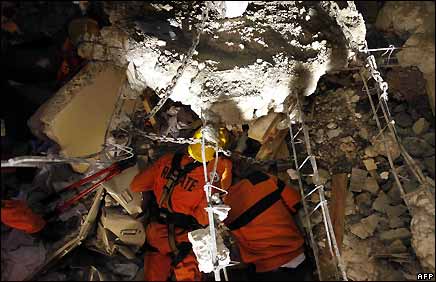 Rescue workers need to be swift to assess where they are most likely to find survivors inside collapsed buildings. Stairwells or the spaces under large concrete beams can provide what rescue workers call 'voids'. It is in places like these that the living can be found. Local knowledge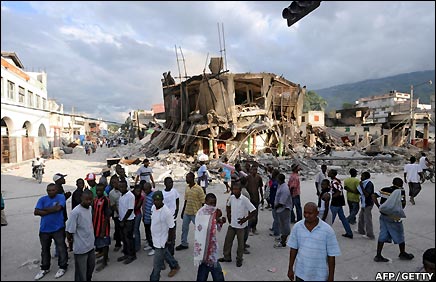 Local people often know the best locations to begin the search for survivors. After speaking to them rescue workers can quickly select the most promising place to begin their work. Lifting equipment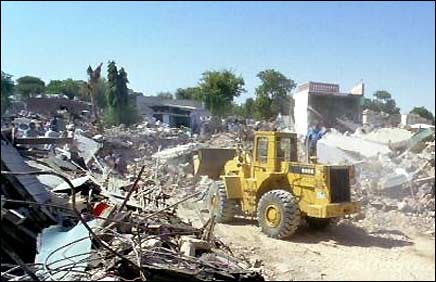 Diggers (here pictured in India) and hydraulic jacks are among the heavy machinery that rescue workers employ to shift rubble. Large concrete slabs on the outside of buildings can be pulled aside by diggers, enabling rescuers to get a view of any people still trapped inside. Listening for survivors Specialist sound equipment can detect the faintest of noises to within a few metres. Silence on the site is needed while a member of the rescue team bangs three times and hopes to hear a response. Carbon dioxide detectors can be used to find survivors rendered unconscious. They work best in confined spaces where they detect the greater CO2 concentration in the air exhaled by those still breathing. Video cameras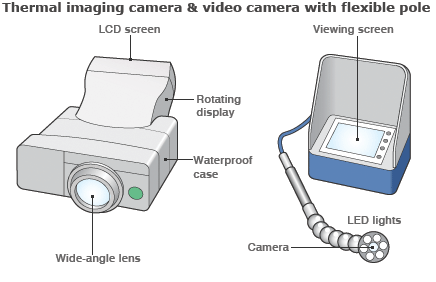 Video cameras placed on the end of flexible poles can be squeezed through gaps in the rubble to help locate survivors. Using this technique means time is saved as less rubble is shifted unnecessarily. Thermal imaging equipment can be used to locate people not directly in a rescuer's line of sight as their body heat can warm the rubble around them. Weak buildings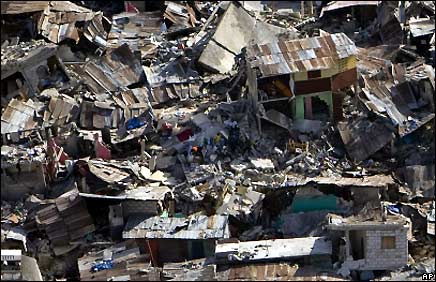 Many of the buildings in Haiti are made of flimsy materials. Buildings like these are quick to collapse in an earthquake but their light weight and low height can give people a relatively good chance of getting out. Rescue dogs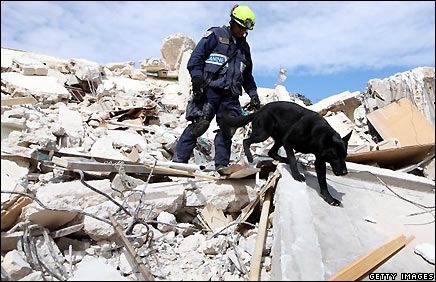 Dogs are extremely effective at using their sense of smell to pick up on signs of life that human rescuers cannot. They are also able to cover large areas quickly, speeding up the search and rescue process. Shifting rubble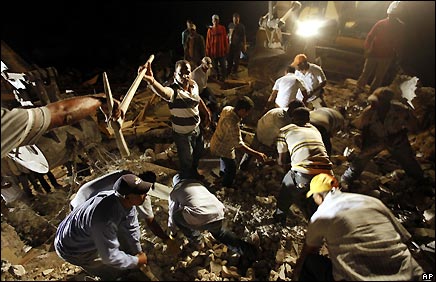 Heavy-lifting equipment is in short supply in Haiti, leaving some rescuers little option but to shift rubble by hand or with pick-axes and shovels. Other tools used by rescuers include chainsaws, disc-cutters and rebar cutters - which can be used to tackle the metal bars in reinforced concrete. How long can search and rescue last?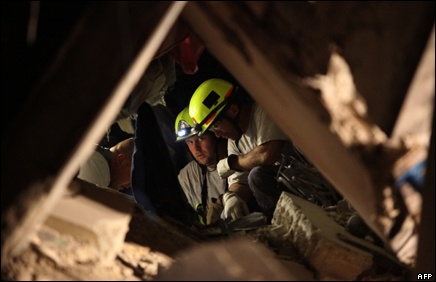 The co-ordinating agency, usually the UN, and the host country, have to take the difficult decision of when to stop looking for a few remaining trapped people and concentrate resources on looking after the thousands of other survivors. The average time for this switch is between five and seven days, but individuals have been known to survive as long as 13 days trapped if they have access to water. Based on information provided by International Rescue Corps Back to more Haiti earthquake coverage.
|  One-Minute World News


Bookmark with:
What are these?