|
 |
 | | | | | | |||||||||||||||||||||||||||||||||||||||||||||||||||||||||||||||||||||||||||||||||||||||||||||||||||||||||||||||||||||||||||||||||||||||||||||||||||||||||||||||||||||||||||||||||||||||||||||||||||||||||||||||||||||||||||||||||||||||||||||||||||||||||||||||||||
| | | You are in: Americas | |||||||||||||||||||||||||||||||||||||||||||||||||||||||||||||||||||||||||||||||||||||||||||||||||||||||||||||||||||||||||||||||||||||||||||||||||||||||||||||||||||||||||||||||||||||||||||||||||||||||||||||||||||||||||||||||||||||||||||||||||||||||||||||||||||||
|
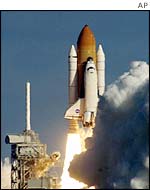
| | Monday, 3 February, 2003, 04:45 GMT Columbia - a picture emerges  The shuttle's autopilot tried to rectify the drag problem
But one big question remains: did the fragment that broke off the External Tank during launch and struck Columbia's left wing cause the disaster? US space agency (Nasa) accident investigators are analysing the great volume of information transmitted to mission control by Columbia. It is proving to be revealing.
A timeline is being built up: At 0853 EST (1353 GMT), about 15 minutes before the shuttle's scheduled landing, the temperature inside Columbia's left wheel well starts to rise abnormally. At the same time, Columbia's left 11 temperature sensors - whose signal line runs through the wheel well - all go offline.
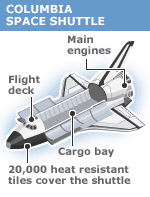
Nasa believes this is significant - Columbia may have been shedding heat-resistant tiles. At 0854, sensors report that the temperature of Columbia's skin in an area under the heat protection tiles on the left side above the wing starts to rise. By 0858, Columbia's autopilot detects something is wrong when it starts to compensate for a slight increase in drag on Columbia's left side. The increased drag suggests that either the heat resistant tiles have become damaged or are missing. Crew not worried At this stage Columbia's pilot would be aware that the autopilot was trimming the trajectory of the spacecraft. Nasa says that the crew would not have been unduly worried.
A minute later, 0859, the drag problem increases significantly, forcing the autopilot to work harder to compensate, harder than during any other space shuttle flight. After another minute, 0900, voice contact with Columbia is lost. Seconds later Columbia breaks up. The crew are killed instantly. Accident investigators say that they believe there could be another 32 seconds of scrambled - but probably useful - engineering telemetry data recorded after the loss of voice contact. This data is expected to be available in the next day or so. Engineers are keen to look at this data to see if there is any indication of Columbia tumbling. 'Not of any significance' The big question now is whether a fragment of white debris seen breaking off a region of the large External Fuel Tank, just 80 seconds after launch, that was seen to strike Columbia's left wing had anything to do with the disaster. In the days after the event, Nasa engineers looked in detail at what happened and concluded that any damage caused by the fragment was "inconsequential". Scientists believe that the fragment that broke off was foam insulation. Astronauts brought in to look at the incident pointed out that the External Tank's foam is actually very soft material, and only produces a harmless streak mark even when it hits a shuttle's window.
A detailed analysis of the velocity, mass and trajectory of the white debris was carried out and Nasa officials concluded that it was "not of any significance". But the question remains: is it a coincidence that the white debris struck the left wing - the site of Columbia's major failure? Investigations are ongoing though Nasa says that suggestions that the debris had any effect at all is pure speculation at this time. No chance of survival The picture emerging of the tragedy is one of damaged or lost heat-protection tiles, possibly in more than one place on Columbia's left side that resulted in a thermal breach that weakened the space shuttle's structural integrity. The autopilot started to compensate, increasingly hard and raising the stress on Columbia's airframe. At the same time, the left wing starts to fragment, possibly tearing off the side of the shuttle which rolls violently and breaks up. The crew had no chance of survival. | |
See also:  03 Feb 03 | Science/Nature 02 Feb 03 | Americas Internet links: The BBC is not responsible for the content of external internet sites Top Americas stories now: Links to more Americas stories are at the foot of the page. | |||||||||||||||||||||||||||||||||||||||||||||||||||||||||||||||||||||||||||||||||||||||||||||||||||||||||||||||||||||||||||||||||||||||||||||||||||||||||||||||||||||||||||||||||||||||||||||||||||||||||||||||||||||||||||||||||||||||||||||||||||||||||||||||||||
 | |
|  E-mail this story to a friend E-mail this story to a friend |
| |
| Links to more Americas stories |
| | | ||
 | ||||
 | | Back to top
| ||
| ---------------------------------------------------------------------------------- To BBC Sport>> | To BBC Weather>> | To BBC World Service>> ---------------------------------------------------------------------------------- © MMIII | News Sources | Privacy |